Molecular therapy improves hearing and balance in a mouse model of a
hereditary disease that causes deafness and balance disorders.
In humans, Usher syndrome is often caused by a mutation in the gene USH1C
that results in the production of a truncated form of the protein
harmonin — which normally guides development of the inner ear (pictured)
— and leads to impaired hearing.
Jennifer Lentz at Louisiana
State University in New Orleans, Michelle Hastings at Rosalind Franklin
University in North Chicago, Illinois, and their collaborators injected
newborn mice with DNA-like molecules that mask the mutation in the
cell's protein-expression machinery, causing normal harmonin to be
produced. This stopped the loss of inner-ear cells that respond to
sound, improved low- and mid-frequency hearing and reduced behaviours
associated with balance impairment such as head-tossing and circling.
The effects lasted at least six months. The authors suggest that a
similar approach may have therapeutic potential in human congenital
deafness.
Because most jellyfishes are venomous, they are also called sea wasps or
marine stingers. Each tentacle contains more than 100,000 cnidocytes
with nematocysts, small needles that inject venom into the victim. The
most dangerous species are found in the tropical Indo-Pacific but the
Caribbean species can also cause serious injuries. This picture was
taken in Guadeloupe (French West Indies) by Dominique Marion, a senior
scientist from the Institut de Biologie Structurale in Grenoble, France.
Visit his galleries at http://diffraction-marine.net for more underwater pictures.
The transparency of zebrafish larvae makes the animals ideal models for seeing deep into tissues. CHARLES MAZEL/VISUALS UNLIMITED/CORBIS
Tiny fish trapped in a virtual world provide a window into complex brain connections.
Virginia Hughes
A recently hatched zebrafish is swimming upriver for the first time. Its big round eyes, bulging on the front of its eyelash-sized body, scan the surroundings. Suddenly, it sees the scenery flying forwards as a gentle current pushes it backwards. The fish flicks its tail to try to stay in place. Or so it thinks.
In reality, the baby fish is paralysed and suspended in a water-filled Petri dish by glass pipettes. The dish sits on the stage of a US$100,000 microscope in the corner of a darkened, cluttered laboratory. A film, projected from below, has transported the fish to a virtual world in which moving bands of light and dark simulate passing underwater scenery.
Although the fish doesn't move, the motor neurons that control its tail are firing away, just as if it were swimming. And when fed into a computer, those signals can control the video display, giving the fish nearly every sign that it is swimming normally. All the while, Florian Engert's microscope peers deep into the fish's tiny, translucent brain to watch neurons glow green as they fire (see ‘A river of deceit’).
City-dwelling sparrows and finches incorporate the butts of
smoked cigarettes into their nests, seemingly to ward off parasitic
mites.
Isabel López-Rull and her colleagues at the National
Autonomous University of Mexico in Mexico City found that nests of house
sparrows (Passer domesticus) and house finches (Carpodacus mexicanus;
pictured) with higher levels of cellulose acetate, a component of
cigarette butts, had fewer mites. The researchers attached fibres from
either smoked or unsmoked cigarette filters to parasite-attracting heat
traps and placed them in 27 sparrow and 28 finch nests. Traps bearing
fibres from smoked filters, which contain more nicotine than those of
unsmoked ones, captured fewer mites, suggesting that nicotine — and
perhaps other compounds in cigarettes — repel the parasites.
Birds have long been known to line their nests with vegetation
that deters parasites, and the authors suggest that the use of cigarette
butts is an urbanized form of this earlier adaptation.
Clifford P. Brangwynne and Anthony A. Hyman celebrate the first book to plausibly suggest how life began.
Aleksandr Oparin (seated) posited that life emerged from compounds in the atmosphere of early Earth.
“No religious or philosophical system, no outstanding thinker ever failed to give this question serious consideration.” So wrote Aleksandr Oparin more than 75 years ago, about the quintessential conundrum of how life self-assembled from inanimate components. The Soviet biochemist’s answer is his book The Origin of Life (1936). Roughly based on a pamphlet he published in 1924, this book is an enormous contribution to our understanding of life’s improbable beginnings. In it, Oparin argues that conditions on early Earth nurtured the synthesis of amino acids and their assembly into protocells.
a switch between peripheral carbohydrate and lipid utilization
AgRP/NPY neurons are critical regulators of body weight and food intake. Concordant with their orexigenic effects, it is expected that AgRP ablation leads to the appearance of a lean phenotype. In the current issue of The EMBO Journal, Joly-Amado et al (2012) describe an obese phenotype in a model of AgRP-ablated mice, and link it to a shift in metabolic profile in efferent tissues such as the
liver, muscle and pancreas.
Researchers have used raw computing power to hunt down a 'black widow' pulsar that is evaporating its companion star.
Pulsars
are stellar remnants that emit lighthouse-like beams of radiation. They
often emit gamma rays, but can usually be spotted only if they also
emit easier-to-detect radio waves. However, Holger Pletsch of the Max
Planck Institute for Gravitational Physics in Hannover, Germany, and his
colleagues found the current pulsar (pictured; circled) through a blind
search of data from the Fermi Gamma-ray Space Telescope.
Using
computers to analyse huge swathes of raw data, the team picked out the
pulsar, which takes 93 minutes to orbit its companion star. This orbital
period is the shortest of any binary pulsar of this type yet found.
Scientists are testing the idea that the stress of modern city life is a breeding ground for psychosis.
In 1965, health authorities in Camberwell, a bustling quarter of
London's southward sprawl, began an unusual tally. They started to keep
case records for every person in the area who was diagnosed with
schizophrenia, depression, bipolar disorder or any other psychiatric
condition. Decades later, when psychiatrists looked back across the
data, they saw a surprising trend: the incidence of schizophrenia had
more or less doubled, from around 11 per 100,000 inhabitants per year in
1965 to 23 per 100,000 in 1997 — a period when there was no such rise
in the general population (J. Boydellet al. Br. J. Psychiatry182, 45–49; 2003).
The result raised a question in many researchers' minds: could the
stress of city life be increasing the risk of schizophrenia and other
mental-health disorders?
In a whirl. Pugh's grand prize-winning entry
(which also won the "Deep Space" category) shows the Whirlpool galaxy's
spiral arms in sharp detail; trails of light show a smaller, neighboring
galaxy being slowly torn apart by the Whirlpool's gravitational pull.
M51—also known as the Whirlpool galaxy—is a classic spiral galaxy that
scientists have studied for centuries. But this mesmerizing new image of
the galaxy has nabbed Australian photographer Martin Pugh the top prize
in the fourth annual Astronomy Photographer of the Year awards,
announced this week. The sharp detail of the spiral’s arms, defined by
dark, dusty areas and bright, pink clouds of hydrogen, impressed the
judges. “This is arguably one of the finest images of M51 ever taken by
an amateur astronomer,” said judge and astronomer Will Gater in a press
release. Pugh’s photograph—which was chosen from more than 800 entries
from around the world and earned him £1500—as well as those of the
winners in categories such as ”Young Astronomy Photographer of the
Year,” “Earth and Space,” and “Our Solar System,” are now on display at the Royal Observatory Greenwich
in the United Kingdom. Other standout entries include a photograph of
the Pleiades cluster, taken by a 15-year-old astronomer, and an image of
this year’s transit of Venus across the sun, which was taken on 6 June.
Behind the scenes. There's more to this story than "sperm meets egg": A substance in semen may prep females for pregnancy.
Credit: Ingram Publishing/Thinkstock
If you're trying to avoid getting pregnant, here's another reason to mistrust the rhythm method of birth control: New research confirms that the fluid in semen, long dismissed as primarily a vehicle for sperm, contains a substance that can trigger ovulation and other pregnancy-supporting hormonal responses in female mammals. The find could lead to new fertility treatments in humans.
ScienceNow: by Emily Underwood on 20 August 2012, 3:04 PM
CLIMATE SCIENCE
Abrupt changes in Greenland ice cycles
An analysis of aerial photographs suggests that ice loss in northwestern Greenland results from discrete events driven by changes in ocean and atmospheric temperature. Kurt Kjær at the University of Copenhagen's Natural History Museum and his team used photographs dating back to 1985 to create a three-dimensional model of ice loss and gain. Rather than exhibiting a uniform melt rate, the model revealed that ice loss peaked in two periods: 1985–93 and 2005–10. The researchers linked this ice loss to warmer oceans and higher summer air temperatures. Ice-sheet models must account for such variability if they are to produce reliable forecasts.
The myelin sheath around nerve fibres serves to speed up electrical nerve signals. But it turns out that it also supplies neurons with fuel to support their high metabolic activity
Blood glucose (orange) can be taken up by non-neuronal brain cells known as oligodendrocytes and astrocytes. Inside the cells, glucose is broken down to lactate (blue), which can then be transferred to neurons and used to generate metabolic energy in the form of ATP molecules (yellow). Lee et al.2 show that oligodendrocytes supply nerve fibres (axons) with lactate delivered through a transporter protein (MCT1, not shown) located in the myelin, a membranous sheath around the axons. Lactate can also be produced in astrocytes and then transferred to axons by means of small pores (gap junctions, not shown) through the myelin. In addition, blood lactate may reach neurons through astrocytes and oligodendrocytes.
Neuroscience: The wrap that feeds neurons
Johanne E. Rinholm & Linda H. Bergersen Nature 487, 435–436 (26 July 2012)
Humans evolved to run. This helps to explain our athletic capacity and
our susceptibility to modern diseases, argue Timothy Noakes and Michael
Spedding.
The forthcoming Olympics in London will celebrate the performance
capacity of humans and our remarkable ability to prepare our bodies and
minds for specific tasks. But, at the same time as we are pushing our
bodies to new limits in athleticism, we are experiencing unprecedented
levels of relatively modern diseases such as obesity, diabetes and
psychiatric and neurodegenerative disorders.
Although some research has yielded mixed results about the benefits of exercise for the brain5,
the literature in general shows that regular exercise can have many
cognitive benefits. Some research suggests that exercise has
antidepressant effects, at least against mild depression, and may even
offset Alzheimer's disease: an exercise programme has been shown to
increase the volume of the brain's hippocampus. More data are needed to
obtain a clearer picture of the effects of exercise on cognition.
Ongoing clinical trials are testing the effects of exercise on
Alzheimer's disease and schizophrenia.
El candidato del PRI, partido dinosaurio que REGRESA, o que siempre estuvo allí, como en el cuento de Tito Monterroso, con todas sus mañas, de fraude electoral y compra de votos, afirma que es paquito y que no hará travesuras, pero en realidad, de acuerdo a Ponchivisión, se trata del escorpión de la fabula que te dice que no te va a picar y a la mitad de la laguna te pica a muerte.
Presidential candidates vow to restore research reputation.
Mexican scientists have watched with dismay as their country, Latin
America's second-largest economy, has slipped down the research-spending
ranks in recent years. Candidates in this week's presidential election
have pledged to change that.
Back in 2000, presidential candidate Vicente Fox promised
to raise Mexico's gross expenditure on research and development from
about 0.4% to 1% of gross domestic product (GERD per GDP, often known as
research intensity). Fox won, but despite legislation meant to
guarantee the increase, Mexico's GERD per GDP has remained below 0.5%.
Science has barely featured in campaigns for subsequent elections,
presidential or otherwise.
The attention to research investment comes as Mexico faces competition
from other emerging economies. “Brazil has almost caught up with Mexico
in GDP per capita, in less than a generation,” says Andrew Selee,
director of the Mexico Institute at the Woodrow Wilson Center in
Washington DC. “Mexicans are starting to ask why.”
For much of the twentieth century, Mexico was considered to be the
leader in Latin American science. Yet although the country still has
pockets of research excellence, Mexico's GERD per GDP now ranks among
the very lowest in the world's top 40 economies (see 'Paltry pesos').
Brazil, by contrast, has consistently spent more than 1%
of its GDP on research since 2006. Its gross expenditure on science,
including industrial research, totals almost US$20 billion per year —
roughly five times Mexico's tally — despite cuts this year of almost 20%
to the US$3.8-billion budget of the Brazilian Ministry of Science,
Technology and Innovation (L. Amorim Science and Development Network 6 March 2012).
“Knowledge, research, development and innovation have not
been a priority for Mexican decision-makers,” says Juan Pedro Laclette,
head of the Scientific and Technological Consultative Forum, a leading
think-tank for science based in Mexico City. “If you plant peanuts, you
are going to harvest peanuts. What Mexican politicians have planted —
have invested — is peanuts.”
The presidential candidate who talks the most about
reviving research is Andrés Manuel López Obrador, who leads the
left-wing Party of the Democratic Revolution. Polls put him just ahead
of Josefina Vázquez Mota of the right-leaning National Action Party,
which has held the presidency since 2000, but behind Enrique Peña Nieto
of the left-wing Institutional Revolutionary Party, which controlled the
Mexican government for more than seven decades until 2000, and became a
symbol of corruption and voter fraud.
In the most recent presidential election, in 2006, Obrador
came second by such a narrow margin that he held regular protests for
five months, during which time he named himself president and even set
up an alternative government — machinations that have damaged his
credibility this time around. His party, however, has deep roots in
academia and enjoys wide support from scientists. René Drucker Colín, a
neuropathologist and former coordinator of basic science at the National
Autonomous University of Mexico in Mexico City, one of Latin America's
biggest universities, is among the researchers who have taken to the
campaign trail on Obrador's behalf.
Obrador plans to
remedy what many researchers complain is a major handicap for Mexican
science: the lack of a clear national research strategy with long-term
commitments to nurturing particular fields. He has pledged to boost
spending and promote the country's biggest science funder, the National
Council on Science and Technology, to a fully fledged ministry — with
Drucker Colín at its head — that would control the nation's entire
science budget.
Peña Nieto, the current presidential front runner, has said less publicly about science. But in an e-mail to Nature,
he wrote: “We need to create a National System for Innovation that
promotes it through effective stimuli, intellectual property rights
protection, better access to credit and coordination between the public
and private sectors.”
Industry contributes less than half of Mexico's GERD per
GDP, and the country's scientists, including Pedro Laclette, have long
bemoaned the schism between industry and academic research. In the
future, wrote Peña Nieto, “private funding will be instrumental to the
success of the system”.
Whoever wins the election, researchers are adamant that
the time for broken promises is past. “If you take the difference
between what they give and what they were supposed to be giving, they
owe science a huge amount of money,” says Franco López.
ANCHORAGE, ALASKA—Two large neighbors of our own
Milky Way galaxy—Andromeda (upper right) and Triangulum (lower
left)—experienced a close encounter in the distant
past. When they brushed past each other billions of years ago, cold
hydrogen gas was pulled out of the galaxies by their mutual gravity. The
faint radio
emission of the resulting hydrogen "bridge," the red material
stretching from Andromeda in the direction of Triangulum, was first
hypothesized based on
observations from a Dutch radio telescope in 2004 and has now been
mapped in detail by the Green Bank Telescope in West Virginia. The
bridge, described
here yesterday at the 220th meeting of the American Astronomical
Society, extends over hundreds of thousands of light-years, and the
hydrogen gas appears
to be clumped into clouds a few thousand light-years across. Next
time, the two galaxies may not be so lucky. Recent Hubble Space
Telescope observations
have revealed that Andromeda will collide and merge with our Milky
Way in a few billion years. By then, the smaller Triangulum galaxy may
have already
collided with either of its two larger neighbors. Ultimately, the
trio will meld into one giant elliptical galaxy, flinging stars and
planets in all
possible directions.
Venus crosses the Sun Venus made its transit across
the Sun on 5–6 June, watched eagerly by professional and amateur
astronomers, as well as by millions of people following it on live
webcasts. The rare event occurs twice in close succession roughly every
120 years; the last transit was in 2004 and the next one will not be
until 2117. Scientists hoped to get a once-in-a-lifetime snapshot of the
climate of the entire planet (rather than the time- and space-limited
atmospheric snapshots taken by the Venus Express probe), and to use the
transit to check the way we measure exoplanets circling distant stars.
See go.nature.com/yhpiqu for more.
Es un Preludio de la transferencia nuclear somática. Lo anterior tiene que ver con el tema de la fertilidad humana en donde los embriones pueden tener complicaciones en la eficiencia de su desarrollo, lo cual es discutido en este artículo:
Time-lapse imaging of embryos reveals complications that undermine
cloning efficiency and potentially contribute to human fertility issues.
Mizutani, E., Yamagata, K., Ono, T., Akagi, S., Geshi, M. &
Wakayama, T. Abnormal chromosome segregation at early cleavage is a
major cause of the full-term developmental failure of mouse clones. Development Biology364, 56–65 (2012). article
Yamagata, K., Suetsugu, R. & Wakayama, T. Long-term,
six-dimensional live-cell imaging for the mouse preimplantation embryo
that does not affect full-term development. Journal of Reproductive Development55, 343–350 (2009). article
Astronomers
using the Hubble Space Telescope to study the dust-shrouded star
Fomalhaut (main image) hope to determine whether a bright point seen in
2004 and 2006 is a planet orbiting the star (arrow, inset).
NASA/ESA/P. Kalas, J. Graham, E. Chiang, E. Kite, M. Clampin, M. Fitzgerald, K. Stapelfeldt & J. Krist
Nature | News Hubble to revisit exoplanet puzzle
Team aims to settle running dispute over mysterious object.
Climate change is likely to alter the species composition of coral reefs, rather than wipe out entire reef ecosystems.
Terry
Hughes at James Cook University in Townsville, Australia, and his team
sampled 132 sites along the full length of the Great Barrier Reef
(pictured), spanning 13° of latitude and a range of sea surface
temperatures. Of the 12 coral taxa sampled, 11 showed significant
differences in abundance across the reef, regardless of how susceptible
they were to thermal stress and bleaching. These differences in
abundance did not follow changes in latitude or temperature.
This flexibility may enable coral reefs to continue functioning as the environment alters with climate change.
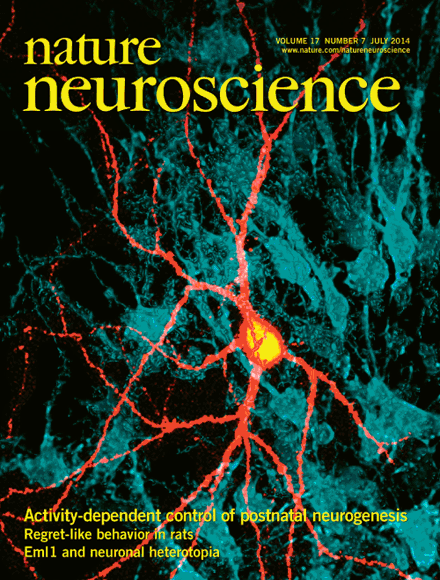
The subependymal zone (SEZ) is a neurogenic niche that gives rise to adult-born neurons. Paez-Gonzalez and colleagues describe a population of cholinergic neurons in this region that modulates neural progenitor proliferation. The cover depicts a SEZ cholinergic neuron (red) along with surrounding stem cells and newborn neuroblasts (teal). Cover image by Chay Kuo. (pp 897 and 934) July 2014 Volume 17 No 7
NEUROSCIENCE
Enzyme duo elicit nerve branching.- A pair of enzymes control where synapses form in neurons by guiding the transport of energy-producing organelles called mitochondria. A team led by Franck Polleux at the Scripps Research Institute in La Jolla, California, identified two enzymes that are required for axons (the long message-transmitting stalks of neurons) to branch and form synapses with other neurons. When these enzymes were overexpressed in neurons, mitochondria moving down the axon, along microtubules, were immobilized at the point where axons would form synapses. Higher levels of these enzymes boosted axon branching (pictured), whereas lower levels reduced it. The researchers suggest that the two enzymes work together to tell mitochondria where to stop and thus where synapses will form. Mitochondrial transport could factor in the development of a wide range of disorders, including autism, through its effects on synapse formation, the authors say.
Massive meteor strike
The Russian city of Chelyabinsk was rocked by the shock wave from a massive meteor that broke up high above the city on 15 February. More than 1,000 people were injured by flying glass as windows shattered throughout the city. Data from the Comprehensive Test Ban Treaty Organization show that the explosion was the equivalent of around half a megatonne of TNT. That would correspond to a meteoroid around 17 metres across and weighing 10,000 tonnes. It is believed to be the largest object to strike Earth since a massive body broke up over the Tunguska river in Siberia in 1908. See go.nature.com/yxeiwq and page 281 for more.
EVENTS NASA snaps Earth at night
Almost exactly 40 years after Apollo 17 astronauts took the iconic Blue Marble photograph of Earth, NASA has released a spectacular view of the planet at night, appropriately named Black Marble. The views, unveiled on 5 December, were stitched together from images taken by a high-resolution sensor aboard the Suomi National Polar-orbiting Partnership weather satellite. Data from the new sensor could be used as a proxy for factors such as population distribution and carbon emissions. See go.nature.com/jfv8ql for more.
PERCEPCIÓN
Facing reality: In the human brain, parts of the fusiform gyrus respond strongly and selectively when a person sees a face, and damage to the fusiform gyrus can impair face perception or naming. Nature Reviews Neuroscience 13, 812-813 (December 2012) |
Alfonso Islas/
Profesor Investigador Titular C de la Universidad de Guadalajara.
Profesor del Posgrado en Ciencias Biomédicas CUCS-CUCBA, con registro en el Padrón de Excelencia del CONACyT
Ubicación: Mexico
Doctor en Ciencias Biomédicas por la UNAM.
Profesor de la Maestría en Comunicación de la Ciencia y la Cultura con registro en el Padrón de Excelencia del CONACyT, del ITESO.
Miembro del Sistema Nacional de Investigadores de 1985 a 1997.
He publicado más de 40 artículos científicos en Revistas nacionales e internacionales.
Jefe del Departamento de Biología Celular y Molecular en 1994-1995.
Director de la División de Ciencias Biológicas 1995-1998.
Jefe de Investigación y Posgrado de la de la UdeG de 1998 a 2000.
Columnista de:
Siglo 21 (1993).
Armario de El Occidental1995-2000).
MURAL del grupo REFORMA (2000-2009).
He publicado en diferentes revistas culturales como Complot, Tragaluz, Replicante, Luvina y recientemente en otras academicas como Renglones (ITESO)
Intereses:
Ciencia, Cine, Literatura.
Películas favoritas
Movie-Art: Metropolis-Fritz Lang
Researchers in Massachusetts have found a way to extract power from the ear. Konstantina Stankovic of the Massachusetts Ear and Eye Infirmary in Boston, Anantha Chandrakasan at the Massachusetts Institute of Technology in Cambridge and their colleagues developed a chip (pictured) that can exploit the inner ear's electrical potential, which is generated to convert sound into neural impulses. The team inserted electrodes from the chip through a natural opening into the inner ear of an anaesthetized guinea pig. The chip extracted around 1 nanowatt of power for up to five hours — enough to power a small radio transmitter. The system could eventually be used to harvest power for devices that diagnose and treat hearing loss in humans, the authors suggest.
BAJO LOS CIELOS AFRICANOS
Gavin Jantjes’ untitled painting depicts a Khoisan girl creating the Milky Way
Galileo xplorador de la conciencia
Galileo Galilei, pictured centre, after a painting by H. J. Detouche, is imagined in Giulio Tononi’s Phi as an explorer of consciousness
Sustainability
The shoe firm Puma has taken innovative steps towards disclosing its environmental impact. Sustainability: The corporate climate overhaul
Microorganíamos de una muestra tomada en el Lago Washington (Seattle), son trending topic este mes.
SPACE WEATHER
Space weather, which sometimes causes auroras on Earth, threatens to play havoc with electrical grids and to disrupt signals from the Global Positioning System.
LUZ EN LA OSCURIDAD
From fish to squid, marine creatures have evolved sophisticated ways to make, use, and perceive light, inspiring researchers interested in optics and animal ecology and behavior
In this octopus, Stauroteuthis syrtensis, suckers have evolved into light organs, possibly used to lure in prey.
In the dark deep, the burglar alarm jellyfish lights up blue (far left) to call in predators of its attackers; researchers copied this pattern with LEDs (near left) to lure organisms to an underwater camera.
Transparent organisms still reflect polarized light (lower right), possibly losing their camouflage.
Researchers hope one day to tap the unique yellow bioluminescence of this polychaete for cell-labeling studies
Computer simulations (above) show that the iridescent cells (blue) that make giant clams colorful form a layer that transmits light to columns of algae (green) deeper down
Transparent organisms are invisible in downwelling light but can be seen by fish with bioluminescent searchlights red-pigmented animals have the reverse problem. But a transparent squid and octopus (above, far right) turn red rapidly when hit with a searchlight, remaining invisible.
CRÉDITOS
EDITH WIDDER, S. ZYLINSKI , ALISON M. SWEENEY, B. STRAUCH, S. JOHNSEN.
NEWS FOCUS Light in the Deep 9 MARCH 2012 VOL 335 SCIENCE: 1160
OTRO PRESENTE RECORDADO
¡Espacio, puro espacio, nulo y vacio! Estoy aquí, pero también estoy allá, todo es aquí, todo es allá. Estoy en cualquier punto eléctrico del espacio y en cualquier fragmento imantado del tiempo: ayer es hoy; mañana, hoy; todo lo que fue, todo lo que será, está siendo ahora mismo, aquí en la Tierra o allá, en la estrella. Octavio Paz. La Hija de Rappaccini (1956)
Vistas a la página totales
ASTRONOMÍA: UNA NUEVA CLASE DE PLANETAS
John Southwort de Nature nos cuenta, que han sido descubiertos tres ejemplos de una nueva familia de planetas, que en vez de orbitar un solo Sol, lo hacen alrededor de dos. La Vía Láctea puede contener millones de estos circumbinarios planetas / Referencia / Nature: 481, 448–449 (26 January 2012)
The Fukushima accident led to mass evacuations from nearby towns such as Minamisoma
LARGA VIDA
Envejecimiento evitable: Generaciones longevas Susan E. Mango
La extensión de la vida de algunos organismos puede ser extendida por medio de mutaciones que alteran el modo de como el DNA es empacado en las células. Un estudio revela que sus efectos pueden durar varias generaciones aún en desendientes geneticamente normales. (Ver artículo p.365)
Nature 479, 302–303 (17 November 2011) doi:10.1038/479302a
"Lab heads also need to ensure that their younger lab members maintain a sense of autonomy rather than of cog-in-the-machine" (Nature 24/7; 1 de Septiembre 2011)
y De parte de Alejandro Rozado:
NOSTALGIA DE DON QUIJOTE: "(...) defender las doncellas, amparar a las viudas, socorrer a los huérfanos y a los menesterosos". Alejandro
Mensajes Inmediatos
First Stars Were Spinning Tops
The first stars, which were up to hundreds of times bigger than the sun, were also whirling at incredible speeds, suggests a new study.
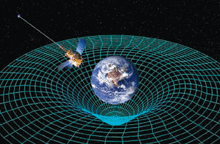
Al fin, La sonda satelital gravitacional "B", Prueba que Einstein Estaba en lo Corrercto
Old Spiders Weave Messy Webs
In humans, we associate getting older with cobwebs of the mind; in spiders, it's the cobwebs themselves that suffer. left photo, built by a 17-day-old spider. The web in the right photo was built by a 188-days-old spider nearing the end of its life
Exhuberancia
En el orden de las manecillas del relog: Cladanora benitezi; Unbelligerus peruviensis; Nassenia binotata y una nifa de Cymbomorpha
Jellyfish eyes on the sky
Box jellyfish seem to have eyes that peer constantly upwards, allowing them to navigate by detecting features on land.
Pánico en Japón
Choque de Placas
Olas de Dsectrucción
El Cerebro en una Cascara de Nuez
Autopsy in a Nutshell (2006) exploits more than the visual similarity between the brain and a walnut, as revealed on closer inspection (bottom).
Izabella Godlewska de Aranda's painting Cosmic Joy! (2009) hints at the idea of many universes
La Académia de Ciencias de Estados Unidos Convoca a la Investigación "Bipolar"
Pingüinos Adélie de la Antarctica son expulsados de su área natural, debido a las temperaturas más tibias que afectan su cadena alimenticia.
The reefs of the Phoenix Islands in Kiribati are part of the world’s largest marine protected area.
Los Muchos Estilos del Esperma
De todos los tipos celulares del reino animal, los más diversos son los espermas, los cuales pueden estar adornados con tallos, pelos chinos y más.
Romance Radioactivo
El escritor y artísta Lauren Redniss publica una biografía poco convencional de los esposos Marie y Pierre Curie.
El Químico Escéptico
Lejos de definir a los elementos químicos, Robert Boyle dudó de su existencia.
Detector de Neutrinos puesto a 2.5 Km de profundidad en la Antártida
El Detector Final: terminado y sellado, puesto a funcionar.
Mimica del Pez Gato
Mutualism can be a double-edged sword if the animals concerned also compete for food. This may explain the discovery that catfish mimics in the Amazon rarely engage in mimicry with related species.
Cuento Retorcido a la Izquierda
Mandibula de una Serpiente (Pareas iwasakii), con dientes extras en la parte inferior, predador de caracoles con concha con vuelta a la derecha, permitió la emergencia de los caracoles con vuelta a la izquierda
BELLEZA ROBADA
Maximum projection image of a confocal stack of a mitotic cycle 14 Drosophila melanogaster embryo using in situ hybridization to visualize mRNA expression of the gap gene giant (red) and the pair-rule gene even-skipped (blue), with Sytox Green (Invitrogen) used to localize nuclei. Specimen preparation and imaging by Cecelia Miles, Dr. Martin Kreitman's lab; projection and cover design by Dr. Vytas Bindokas; University of Chicago, USA.
Arsénico y Encaje
The cells’ large vacuoles may indicate that they are sequestering arsenic.
Neurociencia: Patrones Cerebrales
Los Disturbios Visuales como éste, vistos por algunas personas que padecen migrañas, pueden ser modelados matemáticamente.
Sexy circuits
As in humans, the actions and reactions of male and female fruitflies during courtship are quite distinct. The differences seem to lie in gender-specific neural interpretations of the same sensory signals.
Felipe Calderón muy Verde
Por cierto el presidente Calderón, declaró ayer que si no fuera presidente sería ecologísta. Además dijo, que hay que avanzar en Cancún, para que la única humanidad que existe se salve. Omite el presidente al resto de las especies sobre el planeta.
Efectivamente está muy verde en los conceptos de la Ecología.
Efecto de la Contaminación sobre la Piel, haciendola más vieja.
Father of fractals Mathematician Benoît Mandelbrot
Widely known as the father of fractal geometry, died on 14 October, aged 85. Working at IBM's research labs at Yorktown Heights in New York from 1958, he discovered the mathematical formulae that describe fractal shapes
Elemental shift for kilo
A precise atom count could usurp antique mass standard
CONFORMACIÓN PLÁSTICA DEL AGUA
"Nunca entederemos la Biología, hasta que entendamos al Agua."
Michael Faraday
Físico y Químico británico, nació el 22 de Septiembre de 1791, en Newington, Surrey, Inglaterra. Sus muchos experimentos contribuyeron grandemente al entendimieto del electromagnetismo. Faraday, s econviertió en un gran científico del siglo 19, inició su carrera como químico. Escribió un manual que muestra su destreza en la técnica y el arte, descubrió un número de compuestos orgánicos, entre otros el benceno, y fue el primero en licuar “permanentemente” un gas. Su principal contribución a la ciencia fue, sin embargo, en el campo de la electricidad y el magnetismo. Fue el primero en producir una corriente eléctrica a partir de un campo magnético, inventó el primer motor eléctrico y el dínamo, demostró la relación entre electricidad y enlace químico, descubrió el efecto del magnetísmo en la luz, y descubrió y nombró el diamagnetísmo. Además realizó los experimentos y formulo la teoría con los cuales James Clerk Maxwell estableció la teoría clásica acerca del campo electromagnético.
Moby Dick
Los Humanos hemos reducido la abundancia de muchos vertebrados marinos, incluidas las ballenas, y los tiburones, a solo pequeños porcentajes de sus niveles pre-industriales preferentemente por la pesca desmedida. Se consideran en este artículo las consecuencias de haber removido a estos animales del oceano, eliminando la posibilidad de atrapar carbono, acción útil para abatir el cambio climático.
CONTROL DEL CANCER DE PIEL
B-RAF es el nombre de una proteína que en el caso de los cánceres humanos y en especial del melanoma, esta mutada y por ello el melanocito normal se convierte en invasivo melanoma. Ahora, se reporta el hallazgo de que estos tumores son sensibles a un nuevo fármaco, llamado PLX4032, lo cual ofrece muchas expectativas para el tratamiento del cáncer.
Biología Evolucionaria
Pez elefante - Campylomormyrus rhynchophorus, que puede ayudar a entender como evolucionan las especies comunicandose entre si.
EFEMÉRIDES
John Dalton English scientist John Dalton, born this day (or September 5) in 1766, was a pioneer in the development of modern atomic theory and was considered by some contemporaries as the “father” of both meteorology and chemistry.
EMBRIÓN EN ACCIÓN
Science 329, 967–971 (2010): Ahora se puede disfrutar de esta secuencia en el tiempo, de nuevos detalles acerca del embrión del pez zebra, conforme se van iniciando sus primeras diez divisiones.
“Por más de 10,000 años, los perros han sido el mejor amigo del hombre"
“Los Perros son el único modelo natural para el estudio de desordenes psiquiátricos.”
Nature Neuroscience y Biotechnology
Una representación del virus HIV sobre la superficie de un linfocito T, generada por computadora, muestra la propuesta de Holt et al. de bloquear la entrada a la sangre, al agente causal del SIDA por medio del uso de la enzima llamada dedos de zinc que noquea al receptor del virus CCR5, presente en las células semilla hematopoyecticas en la página (p 839), se puede ver el artículo Credit: ANIMATE4.com/SciencePhotoLibrary
http://0-www.nature.com.fama.us.es/nbt/journal/v28/n8/covers/largecover.gif Nicholas Spitzer y colaboradores demostraron bellas neuronas piramidales en la portada de Nature Neuroscience de Agosto de 2010. (p 944)
"Una inteligencia que en un momento determinado conociera todas las fuerzas que animan a la naturaleza, así como la situación respectiva de los seres que la componen, si además fuera lo suficientemente amplia como para someter a análisis tales datos, podría abarcar en una sola fórmula los movimientos de los cuerpos más grandes del universo y los del átomo más ligero; nada le resultaría incierto y tanto el futuro como el pasado estarían presentes ante sus ojos"
Ensayo filosófico sobre las probabilidades (1814) Pierre-Simon Laplace (1749-1827)
Cosmos
DESPUES DEL BIG BANG
Grabado alemán que representa a Arquímedes en la Bañera
La UNAM, prestigio popular y público
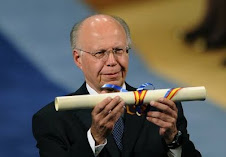
El Rector Narro recibe el Premio Principe de Asturias: Comunicación y Humanidades. Sin la UNAM, nuestro país probablemente sería ya, tal como Felipe Calderon desea, Mecsicou. Por cierto, ni Zedillo, menos Fox ni Calderón son universitarios, o sea que su concepción de país y cultura es, sabe que modo.
Somos una sociedad que recompensa generosamente a quienes nos hacen más pobres.
Paul Krugman premio nobel de economía 2008
¿deben los científicos más destacados, esos que iluminan los caminos de la investigación científica, dedicar algún tiempo a escribir libros de divulgación científica, tarea que puede "desviarlos" de practicar las habilidades por las que son preciosos?
Clade C es el subtipo más prevalente de HIV-1 en el mundo. La estructura cristalina del núcleo de clade C gp120 es descrito por Bjorkman y colegas, en conjunto con el complejo CD4 y el receptor CD4 - inducidos por anticuerpo. El trabajo revela que el anticuerpo hace contacto con ambos, gp120 y CD4. La portada de la revista muestra una escultura de vidrio de una partícula viral realizada por el artistaLuke Jerram (http://www.lukejerram.com/projects/glass_microbiology).pp 608–613
Bien Dotados
De la Biología evolutiva, la gran variación en el tamaño de los genitales en los animales queda definido en el caso del mosquito Gambusia holbrooki, cuyos miembros femeninos de su especie prefieren machos con genitales grandes para copular. De acuerdo a Andrew Kahn y su equipo de colaboradores de la Universidad Australiana de Camberra para estas femeninas, más grande es mejor.
Referencia EVOLUTIONARY BIOLOGY Well endowed Biol. Lett. doi:10.1098/rsbl.2009.0637 (2009)
Capullo Cósmico
El nacimiento de una enana blanca
Tema Reservado
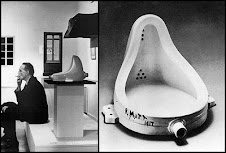
La Fuente de Marcel Duchamp
Precisamente uno de mis seguidores (ver más abajo), dedicó su columna periodística de la semana que termina a un tema, en mi opinión reservado, ¿Ustedes que opinan?
Sigueme
Arquímedes en la Tina invita a participar al que quiera darse un baño de ciencia y polémica.
Galileo Galilei
Nació en Pisa, el 15 de febrero de 1564. Murió en Florencia, el 8 de enero de 1642. Fue un astrónomo, filósofo, matemático y físico que estuvo relacionado estrechamente con la revolución científica. Eminente hombre del Renacimiento, mostró interés por casi todas las ciencias y artes (música, literatura, pintura). Sus logros incluyen la mejora del telescopio, gran variedad de observaciones astronómicas, la primera ley del movimiento y un apoyo determinante para el copernicanismo. Ha sido considerado como el "padre de la astronomía moderna", el "padre de la física moderna" y el "padre de la ciencia". Su trabajo experimental es considerado complementario a los escritos de Francis Bacon en el establecimiento del moderno método científico y su carrera científica es complementaria a la de Johannes Kepler. Su trabajo se considera una ruptura de las asentadas ideas aristotélicas y su enfrentamiento con la Iglesia Católica Romana suele tomarse como el mejor ejemplo de conflicto entre la autoridad y la libertad de pensamiento en la sociedad occidental.
Controvertido
Galileo ante el Santo Oficio: A pesar de pasar dos meses removiendo cielo y tierra para impedir lo inevitable, es convocado el 16 de febrero de 1616 por el Santo Oficio para el examen de las proposiciones de censura. Fue una catástrofe para él. La teoría copernicana fue condenada. El 25 de febrero y 26 de febrero de 1616, la censura es ratificada por la Inquisición y por el papa Pablo V.
Interesante que incursiones en lugares insospechados, pero, en mi opinión ello está reservado a maestros como Marcel Duchamp. Esta bien, es bueno evocar.
Marcel Duchamp, 28 de julio de 1887 - Neully-sur-Siena, 2 de Octubre de 1968). Artista y ajedrecista francés, cuya obra ejerció una fuerte influencia en la evolución del arte de vanguardia del siglo XX.


+posited+that+life+emerged+from+compounds+in+the+atmosphere+of+early+Earth.jpg)