Hubble to revisit exoplanet puzzle

Team aims to settle running dispute over mysterious object


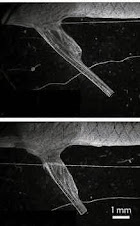
Astronomers using the Hubble Space Telescope to study the dust-shrouded star Fomalhaut (main image) hope to determine whether a bright point seen in 2004 and 2006 is a planet orbiting the star (arrow, inset).
NASA/ESA/P. Kalas, J. Graham, E. Chiang, E. Kite, M. Clampin, M. Fitzgerald, K. Stapelfeldt & J. Krist

 Nature | News    
Hubble to revisit exoplanet puzzle
Team aims to settle running dispute over mysterious object. 


Can coral cope with climate change?


Climate change is likely to alter the species composition of coral reefs, rather than wipe out entire reef ecosystems.
Terry Hughes at James Cook University in Townsville, Australia, and his team sampled 132 sites along the full length of the Great Barrier Reef (pictured), spanning 13° of latitude and a range of sea surface temperatures. Of the 12 coral taxa sampled, 11 showed significant differences in abundance across the reef, regardless of how susceptible they were to thermal stress and bleaching. These differences in abundance did not follow changes in latitude or temperature.
This flexibility may enable coral reefs to continue functioning as the environment alters with climate change.


VEN SIN OJOS


Sponge larvae can detect light despite lacking a nervous system or the photosensitive 'opsin' proteins found in all other known animal eyes. Instead, another pigment called cryptochrome may underlie the light-sensing ability of the sponge Amphimedon queenslandica (pictured), report Todd Oakley at the University of California, Santa Barbara, and his colleagues.

S. LEYS

Cryptochromes mainly absorb blue light and, in other animals, have been implicated in functions from setting circadian rhythms to sensing magnetic fields. The authors identified two cryptochrome genes in the sponge. One, Aq-Cry2, is expressed in the 'ring eyes' of A. queenslandica larvae and has an absorbance peak similar to the wavelengths that trigger larval activity.
Because eye evolution in other animals has always involved opsins, the use of cryptochrome represents a separate lineage of eye evolution, the team suggests.

J. Exp. Biol. 215, 12781286 (2012

in Nature 484, 145 (12 April 2012)

LA ARAÑA HÁBIL Y LISTA

The Diving Bell and the Spider
The water spider spends its life underwater but it needs oxygen to breathe. So when it visits the surface, the spider grabs a bubble of air that sticks to its hairy abdomen. It deposits this bubble into a little silk “diving bell” and breathes from the bell like a tank. The bell functions as a gill: as the spider removes oxygen from the bell, more oxygen flows in. Using a microscopic oxygen sensor, researchers from the University of Adelaide in Australia and Humboldt University in Germany determined how gases move across the bell's surface and found that the spider can stay underwater for up to 24 hours, they report this week in the Journal of Experimental Biology. The spider keeps the bell's volume proportional to its oxygen needs: To eat, it enlarges the bell, puts its food inside, and crawls in after it. Females lay their eggs inside the bell and enlarge it as the brood grows.

EN LOS HOMBROS DE GIGANTES

 
On the Shoulders of Giants

Talk about international collaboration. When Polish astronomer Johannes Hevelius began working on his 1687 map of the stars, he wrote to German theologian Henry Oldenburg, secretary of the Royal Society in England. The request: to locate the 15th century star map of astronomer Ulugh Beg of Samarkand and translate it from Persian.
The Royal Society fulfi lled his request, and the map guided Hevelius’s new observations. This frontispiece to Hevelius’s map pays homage to Beg; as Hevelius presents the book to Urania, muse of astronomy, the top 10 astronomers of all time look on. Beg is third from left.
“He crossed many centuries with that image, putting many people shoulder to shoulder,” says astrophysicist Rim Turkmani, curator of Arabick Roots, which opened 9 June at the Royal Society in London. “It’s a nice gesture from him to say thank you.” The exhibition’s letters, manuscripts, diagrams, and instruments chronicling the flow of scientifi c knowledge from the Arab world to Europe in the 17th century will be on view until November.

SECRETOS DEL LADO OSCURO DE LA LUNA


Pink Floyd probably didn't tell

you that the dark side of the moon glows with "earthshine," sunlight that bounces off our planet and faintly illuminates the lunar night. As astronomers report today in Nature, the intensity and polarization of earthshine (seen reflecting off the moon above) varies as our planet turns, and the effect depends on how many clouds and how much ocean and vegetation face the moon on Earth's sunlit side. Such biosignatures might also be present in light from extrasolar Earth-sized planets, thereby distinguishing vibrant worlds like our own from dead ones like the moon. Moreover, starlight is nearly unpolarized, so by observing polarized light, future space-based telescopes may be able to glimpse Earth's twin directly despite its star's glare. And then everything under the sun will be in tune.


See more ScienceShots.

ScienceShot: The Physics of Ponytails

PENELOPE

Credit: Fotosearch

Thinking about growing a ponytail but have no idea what it's going to look like? Ask a physicist. A new equation helps explain why some ponytails form long, thin manes, while others fan out into a cone. Average humans have about 100,000 hairs on their heads, making a hair-by-hair analysis of shape, length, and texture a daunting proposition. Instead, researchers attacked the problem with techniques from statistical mechanics, which deals with very large numbers of particles acting in a mass. They assumed that a stream of hair behaves much like a stream of fluid, and that its density decreases the further away it gets from a clip or scrunchie. When they plugged those assumptions into a formula describing the energy of a symmetrical tube of fibers, they came out with the Ponytail Shape Equation. The equation, reported 13 February in Physical Review Letters, not only explains different hair geometries, it should also help predict the dynamic behavior of bundles of fibers. In other words, when Rapunzel lets down her hair, how far it will swing. 

ScienceShot: The Physics of Ponytails

on 12 February 2012

SALUDABLES SENTIMIENTOS

 
Sabemos que muchos de nuestros sentimientos se producen en el estómago, por lo que es recomendable que éstos sean buenos, porque así será bueno para la salúd. Ahora, se revela que muchos ingredientes de la medicina herbolaria tradicional no se pueden absorver en el intestino humano. Sin embargo, algunas cohabitantes, las bacterias que viven dentro nuestro de las millones de millones, pueden ayudar a que se absorvan. Por ejemplo el ginseng rico en esteroides glicosidos, con efectos terapeúticos (ginsenosidos), pueden ser absorvidos, y por tanto pueden ser benéficos si nuestros pasajeros microscópicos nos echan una mano. Lo que ahora hay que saber es cuales de esas bacterias son las buenas para ello.  


Faecalibacterium, es una de las candidatas. Escherichia coli adherente e invasiva no.


Microbiome: That healthy gut feeling. James Mitchell Crow. Nature. 480, S88–S89. (22 December 2011), doi:10.1038/480S88a Published online 21 December 2011


EL SONIDO DE LAS ESTRELLAS


Datos de la NASA, especificamente del telescopio espacial Kepler han revolucionado la búsqueda de planetas más allá del Sistema Solar — y ahora and are now doing the same for asteroseismology.

 MÚSICA CELESTIAL

 De la misma manera que un sonido  resuena dentro de la pipa de un órgano de aíre,  para crear un tono musical, esas mismas ondas de sonido en una escala más vasta, pueden resonar dentro de una estrella. Al medir  las frecuencias de esas ondas, los astrónomos, pueden mucho aceeca de la estructura de una estrella.

Kepler’s surprise: The sounds of the stars

ABUNDANCIA DE RANAS EN AMAZONIA

Biodiversity

Amazon frogs galore


The number of frog species living in the Amazon basin could be several times greater than currently recognized.
A team led by Chris Funk at Colorado State University in Fort Collins gathered and analysed genetic, morphological and acoustic data for 252 Engystomops frogs and 208 Hypsiboas tree frogs from across six Amazonian countries, focusing on Ecuador. The authors found that the two known species of Engystomops in fact encompass between five and seven species. Meanwhile, the two recognized Hypsiboas species represent between six and nine species (one undescribed species pictured).
The team concludes that more accurate estimates of biodiversity will improve risk assessments and conservation efforts.

SIN DORMIR PERO PUNTUALES

Insomnia Linked to Punctuality

 Credit: Aaron Edwards/Creative Commons

Insomniacs have one thing going for them: They're punctual. New research finds that people who snooze for the shortest, most fitful intervals arrive more promptly for appointments than sounder sleepers. In the study, reported in a forthcoming issue of the Journal of Sleep Research, scientists scheduled volunteers for overnight observation at a sleep clinic, noting the time they arrived for their appointments and swiped their insurance cards. Those who showed up earliest also slept the worst. Previous studies have linked insomnia to perfectionism, and because excessive punctuality is a form of perfectionism, the new work supports that link. Whether it's perfectionist traits that cause insomnia—or vice versa—warrants further study, however. The researchers next plan to explore whether psychotherapy aimed at reducing obsessive behavior may help curb insomnia—though patients may start coming late to their appointments.

TARZAN AMENAZADO

 Lista Roja de los reptiles.- El camaleón Tarzan (Calumma tarzan, en la imagen), apenas acaba de ser descubierto el año pasado en los bosques de Madagascar, pero, debido al deterioro ambiental, inmediatamente se consideró en peligro de extinción, por la International Union for Conservation of Nature's Red List. El reptil, está perdiendo de manera muy rápida su habitat, debido al avance de la agricultura intensiva, y se une a la lista de otras 21 especies amenazadas en Madagascar.

A MARTE EN 2018

 
Impresión artística de la cápsula SpaceX Dragon llegando a la superficie del planeta rojo capsule — que dicen algunos será por 2018. SpaceX.

Dragon, la nave privada construida para llevar carga a la Estación Espacial Internacional (ISS), esta siendo considerada para servir también para una misión de mucha trascendencia: Llevar al hombre al planeta Marte en el año 2018.

RANA SE ESCONDE DEL ENEMIGO

 
Señales de Alarma. En el bosque peruano, cerca del borde con Brasil, ranas del género Ranitomeya se presentan en una amplia variedad de patrones coloridos; Al fondo abajo, uno de los modelos se mimetiza de manera particular, para defenderse de sus predadores.
 
Credit: Mathieu Chouteau
ScienceNow, 4 de Noviembre 2011.

JUEGO DE ARAÑAS


Call it the insect version of foreplay. Like humans, tangle-web spiders (Anelosimus studiosus) engage in playful sexual behaviors that include courting and mock copulation, usually before the females are mature enough to mate.
Researchers have found that the activity keeps females happy; they're more likely to mate and less likely to attack males when they're finally ready for sex. But foreplay may come with a cost for males. As the team reports online this month in Ethology, males that invest a lot of effort in fooling around with females may end up exhausted and thus less competitive when they need to fight rivals for a mate. So, at least for male spiders, foreplay doesn't always pay off.

RESEARCH PAPER

Jonathan N. Pruitt1, Gordon M. Burghardt2,3, Susan E. Riechert2. Non-Conceptive Sexual Behavior in Spiders: A Form of Play Associated with Body Condition, Personality Type, and Male Intrasexual Selection 
 23 OCT 2011 © 2011 Blackwell Verlag GmbH Ethology

Siete Mil Millones


Published online 19 October 2011 | Nature 478, 300 (2011) | doi:10.1038/478300a
 
News
Siete Mil Millones  y Contando
Una mirada detrás de la noticia de la marca de la humanidad, revela un mundo en transición.

Jeff Tollefson

¿Que significa esta numeralia? Este mes, la atención del Mundo se centra en un hecho importante: Para el lunes próximo, seremos 7 Mil Millones de personas las que poblaremos el planeta, ¿que significa este dato? el más grande “logro de la humanidad”. Una marca más que olímpica, preocupante, sin duda. De acuerdo al consenso, basado en el análisis probabilístico más refinado, el 31 Octubre de 2011 alcanzaremos la cifra. La fecha, es un hito. Asumiendo un error del 1%, el récord llegará más temprano, debido a que se esperaba hasta 2012.
Thomas Buettner, director asistente del Departamento de Cuestiones Sociales y Económicas de la División de Estudios de la Población de Naciones Unidas  en Nueva York, fue el que calculó el dato, en la computadora de su escritorio.

Con un dejo de incertidumbre, los demógrafos, tendrán que lidiar con los sesgos institucionales mencionados y las motivaciones políticas de dar a conocer la noticia, de la proliferación de  los 7 mil millones de personas, con todo y que el gobierno chino prohibe a sus ciudadanos tener más de un hijo, lo cual deja la taza de fertilidad entre 1.3 y 1.8 bebes nacidos por madre en el mundo, pero la proyección es lo que ahora preocupa a los expertos.

En cierta forma, la figura de los 7 Mil Millones es increíble por lo que representa: el doble de habitantes desde 1967, con un incremento de 200,000 personas cada día, es decir crecemos una población como la de Francia cotidianamente. No obstante de que pasar de 6 a 7 Mil millones tomo 13 años, de acuerdo a la tendencia actual, ahora serán necesarios 14 años para llegar a 8 Mil millones (ver 'Snapshots of growth'). El show de las comparaciones, muestra que estamos desacelerando un poco nuestro crecimiento, de tal forma que llegaremos a 10 mil millones de habitantes en el planeta al final del siglo.

Por cierto, el crecimiento se mantendrá, sin embargo más grande en África, donde los niveles de fertilidad permanecerán al más alto límite en el mundo. En contraste, los países industrializados, lograrán mantener estable a su población. Pero Asia seguirá siendo el continente más poblado, aún cuando la fertilidad está a la baja.

Curiosamente, como se puede advertir, las altas tazas de fertilidad, están asociadas a  las altas tazas de pobreza, como si esto la compensara. Debido a ello 3.4 mil millones de  sujetos. sobrevive con menos de 2 dólares cada día (Joel Cohen, Laboratory of Populations,  Rockefeller University, New York). El número de pequeños por mujer en los países menos desarrollados es de 4.5, comparados con los 1.7 en los países desarrollados, esto significa, de forma paradójica, que la mayoría de los incrementos de la cuenta global de la población, se dará en donde existe poco acceso a fuentes de energía y educación. Esta realidad, minimiza la importancia de los esfuerzos internacionales, que los hay, de que la humanidad en el mundo se desarrolle: principalmente, debido a los pequeños ingresos económicos de los menos desarrollados, así como menos salud y educación, observada en ellos, lo cual podría favorecer su no crecimiento en su población, pero a un costo dramático, que incluye muertes por hambre.

Una cosa son las cifras estadísticas y otra la ética implicada.

NUEVO PLANETA

Research 


A planet is born Astronomers have for the first time imaged a planet so young — a mere 2 million years old — that it is still gathering material from its birth site, a disk of gas and dust surrounding a star 145 parsecs (473 light years) from Earth. It lies about as far from its star as Uranus does from our Sun. The finding was published on the arXiv preprint server on 17 October (A. L. Kraus and M. J. Ireland preprint at http://arxiv.org/abs/1110.3808v1; 2011), although it had been shared at conferences previously. See go.nature.com/opa1pd for more.

Premio Nobel de Fisiología y Medicina 2011


El 21 de Mayo de 1999, hace ya más de 12 años, me tropecé con el artículo de las Perspectivas Filognéticas de la Inmunidad Innata,  del cual Jules Hoffmann era uno de los autores principales, me fascinó desde el momento en que lo leí. Por su lado, Bruce Beutler ha sido uno de los cietíficos más leidos, junto con Hoffmann, por un servidor.
Estos 12 años, me la he pasado hablando de ellos dos, entre otros, tratando de convencer al resto de los inmunologos, que son muy exquisitos, de la importancia de la Inmunidad Innata.
Ahora que les han otorgado el Nobel en Fisiología y Medicina 2011, nos les quedará otra, más que aceptar lo anterior, lo cual afortunadamente percibí desde ese 21 de Mayo de 1999, del siglo pasado.


 Quizá lo que no gustaba de la propuesta, es que todos los seres vivo compartimos este tipo de respuesta, desde los insectos, pasando por las plantas, hasta los seres humanos. Es decir, de nueva cuenta, no somos el centro del universo, el antropomorfísmo da paso a la integración de nuestra especie con el resto de la naturaleza, la cual debemos respetar, somos un elemento más de la unidad. Ya se veía venir, en Junio de este año, ya se les había concedido el Shaw Price a ambos inmunólogos.