The first woman on Earth, Pandora, had a “box,” or rather a jar, that Zeus commanded her to safeguard and never open. Of course she opened it, and thus evil spread around the world. Recently, an extraordinarily distinctive group of giant viruses that parasitize amoebas were described and named Pandoravirus, not because they contain all evil but merely because they are jar-shaped. Le gendre et al. have added to this still-tiny pantheon with another jar-shaped viral particle 1.5 µm long, containing a rather diminutive 600-kb AT-rich genome (as compared to the up to 2.8-Mb genome seen in Pandoraviruses) and a cytoplasmic replication machinery resembling that of the original Megaviridae. The authors named the virus Pithovirus because Pandora's jar was called a “pithos” in ancient Greek. This virus was revived from a Siberian permafrost sample and infects amoebas. Although named for the jar and not its contents, given its origins, this discovery hints that viruses more evil than Pithovirus might be revived as the tundra melts.
Science 7 March 2014 Editor Choice: Proc. Natl. Acad. Sci. U.S.A. 111, 10.1073/pnas.1320670111 (2014).
GM maize splits Mexico Legal challenge to transgenic crops has created a rift in the country’s scientific community.
Laura Vargas-Parada
Maize is central to Mexican cuisine, culture and economy, but the
formerly self-sufficient country now imports about one-third of its
supply.
The Mexican scientific community has been torn apart by a legal battle over transgenic maize (corn). Almost a year after activists challenged scientists’ right to plant experimental genetically modified (GM) varieties of the crop that is a staple and symbol of Mexico, maize research is still being stymied by a legal stalemate.
On 5 July 2013, a coalition of activist groups filed a class-action lawsuit to stop the Mexican government granting permits to plant GM maize. That September, a judge ordered a halt to experimental and commercial planting until a final verdict is reached — a resolution that could take months or years.
The lawsuit and ruling have thwarted the plans of multinational companies such as Monsanto, DuPont Pioneer and Dow AgroSciences, which have lobbied for more than a decade to sell their GM maize varieties to Mexican farmers. But they have also stalled public-sector biotechnology researchers who say they are close to producing GM maize strains tolerant to drought and frost, and other varieties with a reduced need for herbicides and fertilizers. These researchers complain that the lawsuit threatens to derail work that could boost maize yields, reduce imports and help to protect against threats such as climate change.
“We are very frustrated, and there is a general sense of despair,” says Beatriz Xoconostle, a plant biotechnologist at the Center for Research and Advanced Studies (Cinvestav) in Mexico City who leads a project to develop drought-tolerant GM maize. “We have been unable to accomplish our objectives.”
Mexico has neither embraced GM technology nor run from it. In 2010, the agriculture and environment ministries authorized commercial planting of GM cotton, and approval for transgenic soya beans followed two years later. By 2013, the country was growing 100,000 hectares of engineered crops — more than any European nation except Spain, although much less than Brazil and Argentina.
But in Mexico, the question of government approval — and public
acceptance — of GM maize is much more sensitive. Fears were stoked in
2001, after researchers at the University of California, Berkeley,
reported that genetic material from GM maize had flowed into local
populations of native maize cultivars (D. Quist and I. H. Chapela Nature414, 541–543; 2001). For years afterwards, even experimental plantings of GM maize were banned.
In
2009, Monsanto, Dow and DuPont Pioneer were granted approval to grow GM
maize for research — as were some academic researchers (see ‘Transgenic tussle’).
But those programmes were halted again by the 2013 lawsuit, which was
spearheaded by agronomist Adelita San Vicente of the Seeds of Life
Foundation, a non-profit organization in Mexico City that opposes GM
crops. The suit claimed that transgenic maize threatens the biodiversity
of traditional varieties grown by subsistence farmers and smallholders
throughout Mexico.
Mexico’s caution over the
introduction of GM maize reflects a deep desire to conserve genetic
diversity in a crop that is central to the nation’s identity. In the
United States, the vast majority of maize is grown to feed livestock and
produce ethanol fuel. But in Mexico, 82% of white maize is grown for
human consumption, often on small farms planted with traditional, rather
than commercial, varieties.
“The richness of genetic diversity of maize in Mexico is invaluable,”
says José Sarukhán, national coordinator of the National Commission for
Knowledge and Use of Biodiversity (CONABIO), a government research
council created in 1992. Sarukhán and other ecologists at CONABIO worry
about gene flow from GM to native varieties, and that the wide adoption
of GM maize could displace them. They are also concerned that GM seed
producers might take legal action against small farmers whose seed ends
up containing transgenic material.
“We are not
against transgenic maize, but want to raise awareness of the
implications of their use, and the consequences when they mix with local
varieties,” says CONABIO plant geneticist Francisca Acevedo.
Once
self-sufficient, Mexico now imports about a third of its maize, most of
it from the United States. Scientists who oppose GM maize argue that
domestic production could be boosted with irrigation and infrastructure
projects, expanded agricultural-extension education programmes for
farmers and careful selection of hybrid seeds and native varieties.
“We are very frustrated, and there is a general sense of despair.”
But government
scientists, including Luis Herrera-Estrella, director of the National
Laboratory of Genomics for Biodiversity at Cinvestav, see biotechnology
as a crucial tool for restoring the country’s maize independence.
Xoconostle’s project, for example, seeks to develop drought-tolerant GM
maize that can also resist low temperatures. Using antisense RNA, she
and her team have modified the plant’s metabolism by inhibiting an
enzyme that destroys trehalose, a sugar involved in stress response. The
result, a variety called CIEA-9, requires only two-thirds of the water
needed by a normal plant. “This strategy is a way to save many of our
local maize varieties,” says Xoconostle.
The
next stage of this research, and the last step required by Mexican law
before Xoconostle can apply for a permit for commercial planting, will
be to cultivate 4-hectare experimental plots of CIEA-9 to test
productivity. But the team will have to wait until a final decision has
been made on the lawsuit before they can go ahead.
Other
government crop scientists have kept their research going by moving
their field trials to other countries. In November, Herrera-Estrella
obtained a permit to plant experimental plots in Argentina. He leads a
group developing transgenic maize and soya that require reduced amounts
of fertilizer and compete well against weeds. The transgenic plants work
by expressing a bacterial gene that codes for phosphite oxidoreductase,
an enzyme that transforms the soil mineral phosphite into phosphate,
which most plants need to grow and produce energy (D. L. López-Arredondo and L. Herrera-Estrella Nature Biotechnol.30, 889–893; 2012).
In
Argentina, Herrera-Estrella says, regulatory requirements are “more
accessible, science-based and sensible”. In Mexico, more than 100
requirements must be fulfilled before a researcher can obtain a permit
for experimental planting; some, he says, make the process unaffordable.
But
despite her frustration with the current planting moratorium,
Xoconostle does not see Mexico’s stringent policies as a problem. “I am
happy we have a strict law that regulates very precisely what we will
allow to be grown in Mexico,” she says.
Daguerreotypes may seem frozen in time, but their surfaces are living landscapes. Popular in the mid-19th century, daguerreotypes were a precursor to photography created by layering silver on a copper plate and exposing it to light and various chemicals, often including gold. Many have become fuzzy or faded with time, and now researchers have discovered one reason why: Their surfaces are teeming with life. Fungi and various unidentified life forms eat and digest the metals, then excrete gold and silver nanoparticles that disfigure the image. The good news is that the precise mixture of life forms on an unidentified daguerreotype may offer clues to where it was made. And the parasites may even suggest new ways to manufacture nanoparticles through biological processes. http://scim.ag/daguerr
Science 21 February 2014: Vol. 343 no. 6173 p. 824 DOI: 10.1126/science.343.6173.824
A replica of Vincent van Gogh’s ear is sitting on display at a German art museum, but it’s not made out of plastic.The body part was created from actual cells and DNAobtained from the great-great-grandson of the artist’s brother, the Los Angeles Times reports. Diemut Strebe, a biodesigner who often works on art pieces that cross over with science, grew the material at a hospital and then used a 3D printer to print the cells into an ear shape.
Greg Dunn and Brian Edwards, Greg Dunn Design, Philadelphia, Pennsylvania; Marty Saggese, Society for Neuroscience, Washington, D.C.; Tracy Bale, University of Pennsylvania, Philadelphia; Rick Huganir, Johns Hopkins University, Baltimore, Maryland
With a Ph.D. in neuroscience and a love of Asian art, it may have been inevitable that Greg Dunn would combine them to create sparse, striking illustrations of the brain. “It was a perfect synthesis of my interests,” Dunn says.
Cortex in Metallic Pastels represents a stylized section of the cerebral cortex, in which axons, dendrites, and other features create a scene reminiscent of a copse of silver birch at twilight. An accurate depiction of a slice of cerebral cortex would be a confusing mess, Dunn says, so he thins out the forest of cells, revealing the delicate branching structure of each neuron.
Dunn blows pigments across the canvas to create the neurons and highlights some of them in gold leaf and palladium, a technique he is keen to develop further.
"My eventual goal is to start an art-science lab," he says. It would bring students of art and science together to develop new artistic techniques. He is already using lithography to give each neuron in his paintings a different angle of reflectance. "As you walk around, different neurons appear and disappear, so you can pack it with information," he says.
The painting was commissioned for the Johns Hopkins University School of Medicine’s Brain Science Institute, but, Dunn says, “I want to be able to communicate with a wide swath of people.” He hopes that lay viewers will see how the branching structures of neurons mirror so many other natural structures, from river deltas to the roots of a tree. “I want to help people to appreciate the beauty of the brain.”
"It is just gorgeous," says judge Alisa Zapp Machalek. "The fact that science can be in an art museum is something we want to encourage."
Prints of Greg Dunn’s art, including this winning painting, are available at www.gregadunn.com.
A new exhibition at the Science Museum in London features the personal archives of one of the most influential modern scientists; James Lovelock. ‘Unlocking Lovelock: Scientist, Inventor, Maverick’ tells the story of the British scientist’s work in medicine, environmental science and planetary science, and displays documents ranging from childhood stories, doodle-strewn lab notebooks and patents to letters from dignitaries such as former UK prime minister (and chemist) Margaret Thatcher. Also included are several of Lovelock’s inventions, such as the electron-capture detector that enabled the measuring of ozone-destroying chlorofluorocarbons in the atmosphere in the 1970s.
Lovelock, born in 1919, is best known for the ‘Gaia hypothesis’, which proposes that the Earth functions as a self-regulating system, similar to a living organism. The idea sparked controversy when Lovelock and microbiologist Lynn Margulis proposed it in the 1970s, but environmental and Earth scientists now accept many of its basic principles. In 2006, his book The Revenge of Gaia predicted disastrous effects from climate change within just a few decades, writing that “only a handful of the teeming billions now alive will survive”.
This week Lovelock spoke to Nature about his career, his earlier predictions and his new book, A Rough Ride to the Future (reviewed last week in Nature).
Is climate change going to be less extreme than you previously thought?
The Revenge of Gaia was over the top, but we were all so taken in by the perfect correlation between temperature and CO2 in the ice-core analyses [from the ice-sheets of Greenland and Antarctica, studied since the 1980s]. You could draw a straight line relating temperature and CO2, and it was such a temptation for everyone to say, “Well, with CO2 rising we can say in such and such a year it will be this hot.” It was a mistake we all made.
We shouldn’t have forgotten that the system has a lot of inertia and we’re not going to shift it very quickly. The thing we’ve all forgotten is the heat storage of the ocean — it’s a thousand times greater than the atmosphere and the surface. You can’t change that very rapidly.
But being an independent scientist, it is much easier to say you made a mistake than if you are a government department or an employee or anything like that.
So what will the next 100 years look like?
That’s impossible to answer. All I can say is that it will be nowhere as near as bad as the worst-case scenario.
Are you still pessimistic about the prospect of finding a political solution to climate change?
Absolutely.
In your latest book you advocate not trying to halt climate change but exercising what you call a sustainable retreat. Why is that?
I think it is the better approach. To rush ahead and advance is very much the Napoleonic approach to battle. It is far better to think about how we can protect ourselves. If we’re going to do any good, we should be making more effort to keep our own home a suitable place to live in for the future than desperately trying to save somewhere remote. This is particularly true of Britain. We nearly died in the Second World War for lack of food. Our agricultural production hasn’t gone up enough to supply today’s population with what we would need. This is something we should be looking at carefully, not just applying guesswork and hoping for the best.
Will nuclear energy be part of the future, despite the Fukushima nuclear disaster in Japan?
The business with Fukushima is a joke. Well, it’s not a joke, it is very serious — how could we have been misled by anything like that? Twenty-six thousand people were killed by the magnitude-9 earthquake and tsunami [that caused the nuclear meltdown], and how many are known to have been killed by the nuclear accident? None.
[On the Chernobyl nuclear disaster, Lovelock writes in A Rough Ride to the Future: “The most amazing lies were told, still are told and widely believed… Despite at least three investigations by reputable physicians, there has been no measurable increase in deaths across Eastern Europe.”]
A lot of investment in green technology has been a giant scam, if well intentioned.
Do you feel vindicated about the way many of the ideas in the Gaia hypothesis have now been accepted by Earth-systems scientists?
I think it is a matter of scientific politics. In practice, most of the senior biologists I encountered in later times had no problem with the notion at all. But they fought bitterly at first. It was very funny to talk with John Maynard Smith, Bill Hamilton and Robert May [eminent evolutionary and population biologists], and to discover that none of them had read any of my books or papers — they were judging the idea by what their students told them.
Was some of that criticism helpful?
In the early stages it wasn’t. And on the geology side it was something quite different — the tendency of some geologists to keep their heads in the sediments is very strong, and they won’t shift it. I’m very intrigued by the latest attempt to resuscitate the idea that all of climate regulation is done by rock weathering. The geologists keep on ignoring the bacteria.
A 1984 rejection letter from Nature of your paper outlining the Gaia hypothesis is displayed in the exhibition. What do you think of peer review — is it necessary?
Well, as far as I’m concerned, I don’t have any peer review. But I don’t think it is practical to get rid of it. For run-of-the-mill papers, say if somebody comes up with a really neat method for analysing some component of urine or that kind of thing, it is important to keep it. But not on larger topics.
Avoiding predators is an essential behavior in which animals must quickly transform sensory cues into evasive actions. Sensory reflexes are particularly fast in flying insects such as flies, but the means by which they evade aerial predators is not known. Using high-speed videography and automated tracking of flies in combination with aerodynamic measurements on flapping robots, we show that flying flies react to looming stimuli with directed banked turns. The maneuver consists of a rapid body rotation followed immediately by an active counter-rotation and is enacted by remarkably subtle changes in wing motion. These evasive maneuvers of flies are substantially faster than steering maneuvers measured previously and indicate the existence of sensory-motor circuitry that can reorient the fly’s flight path within a few wingbeats.
Science 11 April 2014: Vol. 344 no. 6180 pp. 172-177 DOI: 10.1126/science.1248955
Crustaceans go through pubertal molt to provide the animal with features that are distinct to adults. The androgenic gland hormone (AGH) is important for male differentiation and secondary male characteristics. Females lack AGH, so are considered the default sex for development. Previous work has shown that when the eyestalk is ablated in the females of some crab species, mating and maternal care structures show defects; however, the animals are able to molt and develop into giant immature crabs. In studying the blue crab, Callinectes sapidus, Zmora et al. now show that the endocrine system and localized activity of a hormone termed crustacean female sex hormone (CFSH) from the eyestalk ganglia are involved in adult-specific development through the control of the pubertal-terminal molt. When CFSH is eliminated, the brooding features, which are important for mating and brooding large clutches, are abnormal. This work shows that the endrocrine system functions via a female-specific hormone for the development of adult morphological structures associated with female reproduction, i.e., for mating and brooding.
Modeling reveals how the central nervous system systematically chooses optimal muscle responses to maintain balance
The central nervous system (CNS) comprises the brain
and spinal cord, and coordinates all our bodily activities. One of the
functions of the CNS is to choose the most efficient muscle movements in
order to conserve energy and allow the body to move smoothly, and it is
believed that the CNS trains itself through experience to narrow down
the number of options. Fady Alnajjar and colleagues from the Intelligent
Behavior Control Unit of the RIKEN Brain Science Institute have now
modeled the behavior of muscles during balance tests to illustrate how
the human CNS trains itself to maintain balance1.
“Modeling
of the computational mechanisms between the CNS and muscle control,
which we call muscle synergy, is challenging,” explains Alnajjar. “Our
study concerns the muscle synergy behind basic motor skills, such as
maintaining balance, in healthy humans.”
Alnajjar’s
team developed a model of ‘muscle synergy’ by devising two novel
parameters: the synergy stability index (SSI), which measures the
similarities between muscle usage in repeated behaviors and therefore
the stability of the neural command, and the synergy coordination index,
which measures the overall size of the synergy space required to carry
out a movement and therefore the level of coordination between muscles.
The
researchers used these two parameters to measure the interactions
between the human CNS and muscles during balance tests. Eight
participants were asked to stand on a randomly moving platform, using
only their hips and ankles to maintain balance, with electrodes attached
to their major leg and back muscles.
Both
indices were found to successfully characterize the muscle synergy
associated with balance skill. “Participants with strong balancing
ability showed high SSI levels,” notes Alnajjar, “implying that their
CNSs were aware of the best muscle synergy for responding to balance
disturbances. Participants with low balancing ability had low SSI
levels. Also, good balancers used tightly coordinated muscles, resulting
in smoother movements.”
In each case, the CNS
appeared to search for a narrow muscle-synergy space of stable neural
commands and coordinated muscle reactions. In a second set of
experiments using the lowest scorers from round one, each person
completed five more sessions on the balance platform. The participants
showed significant improvement on completion, suggesting that with
training, the CNS can narrow its muscle-synergy space and thus improve
coordination.
Alnajjar hopes that an advanced
version of these indices could be used to develop therapies for
post-stroke motor function recovery as a means of creating targeted,
effective neuro-rehabilitation systems.
Las pulgas de arena Tunga penetrans pasan la mitad de su vida en la tierra y la otra mitad en un una forma de vida, como por ejemplo un pie humano. Las infestaciones - en América del Sur y África subsahariana - pueden producir una condición dolorosa llamada tungiasis que hace que sea difícil caminar y puede conducir a otras infecciones. Pero la enfermedad ha causado escasa atención por parte de los médicos e investigadores que saben muy poco acerca del ciclo de vida de la criatura, incluso que cuando no está en el suelo tiene sexo y fertiliza sus huevos.
Por eso, cuando Marlene Thielecke, estudiante de doctorado de la Universidad Charité de Berlín, estaba estudiando tungiasis en Madagascar, descubrió que ella misma alojaba al parásito, dejó que su propio cuerpo se convierta en un laboratorio para estudiar la criatura.
La hembra inmadura se entierra en la piel de un hospedero a lo largo de 2 semanas, y se hincha hasta un máximo de 10 mm de diámetro. Pronto empieza expulsar huevos, y muere después de 4 a 6 semanas. La única manera de deshacerse de los parásitos es sacarlos de la piel.
Thielecke tomó fotografías regulares de su infestación. La pulga creció con normalidad, pero no estaba poniendo los huevos. Fue extraño - que todavía estaba vivo después de 2 meses (en ese momento ella la extrajo).
La explicación más probable? La pulga nunca fue fertilizada, Thielecke y su tutor, experto en tungiasis, Hermann Feldmeier, llegaron a esa conclusión en un artículo publicado este mes. En la búsqueda de la pulga, Thielecke había tomado precauciones, usar calcetines y zapatos cerrados para protegerse de otras pulgas, incluyendo potencialmente la fertilización de los machos. Esto sugiere una respuesta al enigma de que las pulgas son fertilizadas después de que se incrustan en la piel . http://scim.ag/fleafert
Artist's impression VICTOR HABBICK VISIONS/SPL/Getty
The
defining characteristic of a black hole may have to give, if the two
pillars of modern physics — general relativity and quantum theory — are
both correct.
Notion of an 'event horizon', from which nothing can escape, is incompatible with quantum theory, physicist claims.
Most physicists foolhardy enough to write a paper claiming that “there
are no black holes” — at least not in the sense we usually imagine —
would probably be dismissed as cranks. But when the call to redefine
these cosmic crunchers comes from Stephen Hawking, it’s worth taking
notice. In a paper posted online, the physicist, based at the University
of Cambridge, UK, and one of the creators of modern black-hole theory,
does away with the notion of an event horizon, the invisible boundary
thought to shroud every black hole, beyond which nothing, not even
light, can escape.
In its stead, Hawking’s radical proposal is a much more benign “apparent
horizon”, which only temporarily holds matter and energy prisoner
before eventually releasing them, albeit in a more garbled form.
“There is no escape from a black hole in classical theory,” Hawking told Nature.
Quantum theory, however, “enables energy and information to escape from
a black hole”. A full explanation of the process, the physicist admits,
would require a theory that successfully merges gravity with the other
fundamental forces of nature. But that is a goal that has eluded
physicists for nearly a century. “The correct treatment,” Hawking says,
“remains a mystery.”
Hawking posted his paper on the arXiv preprint server on 22 January1.
He titled it, whimsically, 'Information preservation and weather
forecasting for black holes', and it has yet to pass peer review. The
paper was based on a talk he gave via Skype at a meeting at the Kavli
Institute for Theoretical Physics in Santa Barbara, California, in
August 2013 (watch video of the talk).
Fire fighting
Hawking's
new work is an attempt to solve what is known as the black-hole
firewall paradox, which has been vexing physicists for almost two years,
after it was discovered by theoretical physicist Joseph Polchinski of
the Kavli Institute and his colleagues (see 'Astrophysics: Fire in the hole!').
In
a thought experiment, the researchers asked what would happen to an
astronaut unlucky enough to fall into a black hole. Event horizons are
mathematically simple consequences of Einstein's general theory of
relativity that were first pointed out by the German astronomer Karl
Schwarzschild in a letter he wrote to Einstein
in late 1915, less than a month after the publication of the theory. In
that picture, physicists had long assumed, the astronaut would happily
pass through the event horizon, unaware of his or her impending doom,
before gradually being pulled inwards — stretched out along the way,
like spaghetti — and eventually crushed at the 'singularity', the black
hole’s hypothetical infinitely dense core.
But on analysing the situation in detail, Polchinski’s team came to
the startling realization that the laws of quantum mechanics, which
govern particles on small scales, change the situation completely.
Quantum theory, they said, dictates that the event horizon must actually
be transformed into a highly energetic region, or 'firewall', that
would burn the astronaut to a crisp.
This was
alarming because, although the firewall obeyed quantum rules, it flouted
Einstein’s general theory of relativity. According to that theory,
someone in free fall should perceive the laws of physics as being
identical everywhere in the Universe — whether they are falling into a
black hole or floating in empty intergalactic space. As far as Einstein
is concerned, the event horizon should be an unremarkable place.
Beyond the horizon
Now
Hawking proposes a third, tantalizingly simple, option. Quantum
mechanics and general relativity remain intact, but black holes simply
do not have an event horizon to catch fire. The key to his claim is that
quantum effects around the black hole cause space-time to fluctuate too
wildly for a sharp boundary surface to exist.
In
place of the event horizon, Hawking invokes an “apparent horizon”, a
surface along which light rays attempting to rush away from the black
hole’s core will be suspended. In general relativity, for an unchanging
black hole, these two horizons are identical, because light trying to
escape from inside a black hole can reach only as far as the event
horizon and will be held there, as though stuck on a treadmill. However,
the two horizons can, in principle, be distinguished. If more matter
gets swallowed by the black hole, its event horizon will swell and grow
larger than the apparent horizon.
Conversely,
in the 1970s, Hawking also showed that black holes can slowly shrink,
spewing out 'Hawking radiation'. In that case, the event horizon would,
in theory, become smaller than the apparent horizon. Hawking’s new
suggestion is that the apparent horizon is the real boundary. “The
absence of event horizons means that there are no black holes — in the
sense of regimes from which light can't escape to infinity,” Hawking
writes.
“The picture Hawking gives sounds
reasonable,” says Don Page, a physicist and expert on black holes at the
University of Alberta in Edmonton, Canada, who collaborated with
Hawking in the 1970s. “You could say that it is radical to propose
there’s no event horizon. But these are highly quantum conditions, and
there’s ambiguity about what space-time even is, let alone whether there
is a definite region that can be marked as an event horizon.”
Although
Page accepts Hawking’s proposal that a black hole could exist without
an event horizon, he questions whether that alone is enough to get past
the firewall paradox. The presence of even an ephemeral apparent
horizon, he cautions, could well cause the same problems as does an
event horizon.
Unlike the event horizon, the
apparent horizon can eventually dissolve. Page notes that Hawking is
opening the door to a scenario so extreme “that anything in principle
can get out of a black hole”. Although Hawking does not specify in his
paper exactly how an apparent horizon would disappear, Page speculates
that when it has shrunk to a certain size, at which the effects of both
quantum mechanics and gravity combine, it is plausible that it could
vanish. At that point, whatever was once trapped within the black hole
would be released (although not in good shape).
If
Hawking is correct, there could even be no singularity at the core of
the black hole. Instead, matter would be only temporarily held behind
the apparent horizon, which would gradually move inward owing to the
pull of the black hole, but would never quite crunch down to the centre.
Information about this matter would not destroyed, but would be highly
scrambled so that, as it is released through Hawking radiation, it would
be in a vastly different form, making it almost impossible to work out
what the swallowed objects once were.
“It
would be worse than trying to reconstruct a book that you burned from
its ashes,” says Page. In his paper, Hawking compares it to trying to
forecast the weather ahead of time: in theory it is possible, but in
practice it is too difficult to do with much accuracy.
Polchinski,
however, is sceptical that black holes without an event horizon could
exist in nature. The kind of violent fluctuations needed to erase it are
too rare in the Universe, he says. “In Einstein’s gravity, the
black-hole horizon is not so different from any other part of space,”
says Polchinski. “We never see space-time fluctuate in our own
neighbourhood: it is just too rare on large scales.”
Raphael
Bousso, a theoretical physicist at the University of California,
Berkeley, and a former student of Hawking's, says that this latest
contribution highlights how “abhorrent” physicists find the potential
existence of firewalls. However, he is also cautious about Hawking’s
solution. “The idea that there are no points from which you cannot
escape a black hole is in some ways an even more radical and problematic
suggestion than the existence of firewalls,” he says. "But the fact
that we’re still discussing such questions 40 years after Hawking’s
first papers on black holes and information is testament to their
enormous significance."
Portada de la revista Science del 18 de Octubre de 2013, que nos muestra la caleta completa encontrada en Dmisisi Georgia de un Homo de 1.77 millones de años de edad y que nos recuerda el origen de nuestra humanidad.
Peer carefully at the lower right of this image and you might just spot the tiny dot that is Earth, seen from more than a billion kilometres away. This vista of Saturn’s famous rings backlit by the Sun was assembled from 141 individual images taken by NASA’s Cassini probe after it moved into Saturn’s shadow in July.
FIRE IN THE SKY
This huge fireball was created by the largest meteor known to hit Earth since the Tunguska rock landed in 1908. Russia was once again the unlucky recipient: the meteor exploded some 30 kilometres above Chelyabinsk in the Urals and shone brighter than the Sun.
BONUS ONLINE-ONLY EDITORS’ CHOICE
Although this image didn’t make our end-of-year print piece, it captivated our selection team. It shows Terry Headley, a volunteer with the University of Minnesota Raptor Center, rescuing an injured bald eagle in April.
365 days: Images of the year http://www.nature.com/news/365-days-images-of-the-year-1.14303
Ciertos sintomas de la esquizofrenia pueden surgir de la activación incontrolada de neuronas que ayudan a construir recuerdos durante los períodos de descanso.
Mapa de la actividad neuronal durante el descanso, en ratones deficientes de calcineurina. Comparativamente, en los ratones normales, el mapa revela patrones de encendido de neuronal complejos, los cuales están ausentes en el modelo de esquizofrenia de ratón.
When viruses (green) attack bacteria, the bacteria respond with DNA-targeting defenses that biologists have learned to exploit for genetic engineering.
CREDIT: EYE OF SCIENCE/SCIENCE SOURCEScience 23 August 2013: Vol. 341 no. 6148 pp. 833-836
By scanning blobs of brain activity, scientists may be able to decode people's thoughts, their dreams and even their intentions.
Anne Hathaway's face appears in a clip from the film Bride Wars,
engaged in heated conversation with Kate Hudson. The algorithm
confidently labels them with the words 'woman' and 'talk', in large
type. Another clip appears — an underwater scene from a wildlife
documentary. The program struggles, and eventually offers 'whale' and
'swim' in a small, tentative font.
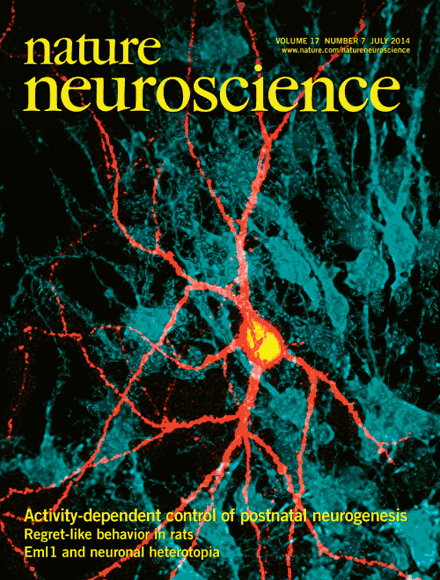
The subependymal zone (SEZ) is a neurogenic niche that gives rise to adult-born neurons. Paez-Gonzalez and colleagues describe a population of cholinergic neurons in this region that modulates neural progenitor proliferation. The cover depicts a SEZ cholinergic neuron (red) along with surrounding stem cells and newborn neuroblasts (teal). Cover image by Chay Kuo. (pp 897 and 934) July 2014 Volume 17 No 7
NEUROSCIENCE
Enzyme duo elicit nerve branching.- A pair of enzymes control where synapses form in neurons by guiding the transport of energy-producing organelles called mitochondria. A team led by Franck Polleux at the Scripps Research Institute in La Jolla, California, identified two enzymes that are required for axons (the long message-transmitting stalks of neurons) to branch and form synapses with other neurons. When these enzymes were overexpressed in neurons, mitochondria moving down the axon, along microtubules, were immobilized at the point where axons would form synapses. Higher levels of these enzymes boosted axon branching (pictured), whereas lower levels reduced it. The researchers suggest that the two enzymes work together to tell mitochondria where to stop and thus where synapses will form. Mitochondrial transport could factor in the development of a wide range of disorders, including autism, through its effects on synapse formation, the authors say.
Massive meteor strike
The Russian city of Chelyabinsk was rocked by the shock wave from a massive meteor that broke up high above the city on 15 February. More than 1,000 people were injured by flying glass as windows shattered throughout the city. Data from the Comprehensive Test Ban Treaty Organization show that the explosion was the equivalent of around half a megatonne of TNT. That would correspond to a meteoroid around 17 metres across and weighing 10,000 tonnes. It is believed to be the largest object to strike Earth since a massive body broke up over the Tunguska river in Siberia in 1908. See go.nature.com/yxeiwq and page 281 for more.
EVENTS NASA snaps Earth at night
Almost exactly 40 years after Apollo 17 astronauts took the iconic Blue Marble photograph of Earth, NASA has released a spectacular view of the planet at night, appropriately named Black Marble. The views, unveiled on 5 December, were stitched together from images taken by a high-resolution sensor aboard the Suomi National Polar-orbiting Partnership weather satellite. Data from the new sensor could be used as a proxy for factors such as population distribution and carbon emissions. See go.nature.com/jfv8ql for more.
PERCEPCIÓN
Facing reality: In the human brain, parts of the fusiform gyrus respond strongly and selectively when a person sees a face, and damage to the fusiform gyrus can impair face perception or naming. Nature Reviews Neuroscience 13, 812-813 (December 2012) |
Alfonso Islas/
Profesor Investigador Titular C de la Universidad de Guadalajara.
Profesor del Posgrado en Ciencias Biomédicas CUCS-CUCBA, con registro en el Padrón de Excelencia del CONACyT
Ubicación: Mexico
Doctor en Ciencias Biomédicas por la UNAM.
Profesor de la Maestría en Comunicación de la Ciencia y la Cultura con registro en el Padrón de Excelencia del CONACyT, del ITESO.
Miembro del Sistema Nacional de Investigadores de 1985 a 1997.
He publicado más de 40 artículos científicos en Revistas nacionales e internacionales.
Jefe del Departamento de Biología Celular y Molecular en 1994-1995.
Director de la División de Ciencias Biológicas 1995-1998.
Jefe de Investigación y Posgrado de la de la UdeG de 1998 a 2000.
Columnista de:
Siglo 21 (1993).
Armario de El Occidental1995-2000).
MURAL del grupo REFORMA (2000-2009).
He publicado en diferentes revistas culturales como Complot, Tragaluz, Replicante, Luvina y recientemente en otras academicas como Renglones (ITESO)
Intereses:
Ciencia, Cine, Literatura.
Películas favoritas
Movie-Art: Metropolis-Fritz Lang
Researchers in Massachusetts have found a way to extract power from the ear. Konstantina Stankovic of the Massachusetts Ear and Eye Infirmary in Boston, Anantha Chandrakasan at the Massachusetts Institute of Technology in Cambridge and their colleagues developed a chip (pictured) that can exploit the inner ear's electrical potential, which is generated to convert sound into neural impulses. The team inserted electrodes from the chip through a natural opening into the inner ear of an anaesthetized guinea pig. The chip extracted around 1 nanowatt of power for up to five hours — enough to power a small radio transmitter. The system could eventually be used to harvest power for devices that diagnose and treat hearing loss in humans, the authors suggest.
BAJO LOS CIELOS AFRICANOS
Gavin Jantjes’ untitled painting depicts a Khoisan girl creating the Milky Way
Galileo xplorador de la conciencia
Galileo Galilei, pictured centre, after a painting by H. J. Detouche, is imagined in Giulio Tononi’s Phi as an explorer of consciousness
Sustainability
The shoe firm Puma has taken innovative steps towards disclosing its environmental impact. Sustainability: The corporate climate overhaul
Microorganíamos de una muestra tomada en el Lago Washington (Seattle), son trending topic este mes.
SPACE WEATHER
Space weather, which sometimes causes auroras on Earth, threatens to play havoc with electrical grids and to disrupt signals from the Global Positioning System.
LUZ EN LA OSCURIDAD
From fish to squid, marine creatures have evolved sophisticated ways to make, use, and perceive light, inspiring researchers interested in optics and animal ecology and behavior
In this octopus, Stauroteuthis syrtensis, suckers have evolved into light organs, possibly used to lure in prey.
In the dark deep, the burglar alarm jellyfish lights up blue (far left) to call in predators of its attackers; researchers copied this pattern with LEDs (near left) to lure organisms to an underwater camera.
Transparent organisms still reflect polarized light (lower right), possibly losing their camouflage.
Researchers hope one day to tap the unique yellow bioluminescence of this polychaete for cell-labeling studies
Computer simulations (above) show that the iridescent cells (blue) that make giant clams colorful form a layer that transmits light to columns of algae (green) deeper down
Transparent organisms are invisible in downwelling light but can be seen by fish with bioluminescent searchlights red-pigmented animals have the reverse problem. But a transparent squid and octopus (above, far right) turn red rapidly when hit with a searchlight, remaining invisible.
CRÉDITOS
EDITH WIDDER, S. ZYLINSKI , ALISON M. SWEENEY, B. STRAUCH, S. JOHNSEN.
NEWS FOCUS Light in the Deep 9 MARCH 2012 VOL 335 SCIENCE: 1160
OTRO PRESENTE RECORDADO
¡Espacio, puro espacio, nulo y vacio! Estoy aquí, pero también estoy allá, todo es aquí, todo es allá. Estoy en cualquier punto eléctrico del espacio y en cualquier fragmento imantado del tiempo: ayer es hoy; mañana, hoy; todo lo que fue, todo lo que será, está siendo ahora mismo, aquí en la Tierra o allá, en la estrella. Octavio Paz. La Hija de Rappaccini (1956)
Vistas a la página totales
ASTRONOMÍA: UNA NUEVA CLASE DE PLANETAS
John Southwort de Nature nos cuenta, que han sido descubiertos tres ejemplos de una nueva familia de planetas, que en vez de orbitar un solo Sol, lo hacen alrededor de dos. La Vía Láctea puede contener millones de estos circumbinarios planetas / Referencia / Nature: 481, 448–449 (26 January 2012)
The Fukushima accident led to mass evacuations from nearby towns such as Minamisoma
LARGA VIDA
Envejecimiento evitable: Generaciones longevas Susan E. Mango
La extensión de la vida de algunos organismos puede ser extendida por medio de mutaciones que alteran el modo de como el DNA es empacado en las células. Un estudio revela que sus efectos pueden durar varias generaciones aún en desendientes geneticamente normales. (Ver artículo p.365)
Nature 479, 302–303 (17 November 2011) doi:10.1038/479302a
"Lab heads also need to ensure that their younger lab members maintain a sense of autonomy rather than of cog-in-the-machine" (Nature 24/7; 1 de Septiembre 2011)
y De parte de Alejandro Rozado:
NOSTALGIA DE DON QUIJOTE: "(...) defender las doncellas, amparar a las viudas, socorrer a los huérfanos y a los menesterosos". Alejandro
Mensajes Inmediatos
First Stars Were Spinning Tops
The first stars, which were up to hundreds of times bigger than the sun, were also whirling at incredible speeds, suggests a new study.
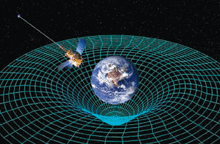
Al fin, La sonda satelital gravitacional "B", Prueba que Einstein Estaba en lo Corrercto
Old Spiders Weave Messy Webs
In humans, we associate getting older with cobwebs of the mind; in spiders, it's the cobwebs themselves that suffer. left photo, built by a 17-day-old spider. The web in the right photo was built by a 188-days-old spider nearing the end of its life
Exhuberancia
En el orden de las manecillas del relog: Cladanora benitezi; Unbelligerus peruviensis; Nassenia binotata y una nifa de Cymbomorpha
Jellyfish eyes on the sky
Box jellyfish seem to have eyes that peer constantly upwards, allowing them to navigate by detecting features on land.
Pánico en Japón
Choque de Placas
Olas de Dsectrucción
El Cerebro en una Cascara de Nuez
Autopsy in a Nutshell (2006) exploits more than the visual similarity between the brain and a walnut, as revealed on closer inspection (bottom).
Izabella Godlewska de Aranda's painting Cosmic Joy! (2009) hints at the idea of many universes
La Académia de Ciencias de Estados Unidos Convoca a la Investigación "Bipolar"
Pingüinos Adélie de la Antarctica son expulsados de su área natural, debido a las temperaturas más tibias que afectan su cadena alimenticia.
The reefs of the Phoenix Islands in Kiribati are part of the world’s largest marine protected area.
Los Muchos Estilos del Esperma
De todos los tipos celulares del reino animal, los más diversos son los espermas, los cuales pueden estar adornados con tallos, pelos chinos y más.
Romance Radioactivo
El escritor y artísta Lauren Redniss publica una biografía poco convencional de los esposos Marie y Pierre Curie.
El Químico Escéptico
Lejos de definir a los elementos químicos, Robert Boyle dudó de su existencia.
Detector de Neutrinos puesto a 2.5 Km de profundidad en la Antártida
El Detector Final: terminado y sellado, puesto a funcionar.
Mimica del Pez Gato
Mutualism can be a double-edged sword if the animals concerned also compete for food. This may explain the discovery that catfish mimics in the Amazon rarely engage in mimicry with related species.
Cuento Retorcido a la Izquierda
Mandibula de una Serpiente (Pareas iwasakii), con dientes extras en la parte inferior, predador de caracoles con concha con vuelta a la derecha, permitió la emergencia de los caracoles con vuelta a la izquierda
BELLEZA ROBADA
Maximum projection image of a confocal stack of a mitotic cycle 14 Drosophila melanogaster embryo using in situ hybridization to visualize mRNA expression of the gap gene giant (red) and the pair-rule gene even-skipped (blue), with Sytox Green (Invitrogen) used to localize nuclei. Specimen preparation and imaging by Cecelia Miles, Dr. Martin Kreitman's lab; projection and cover design by Dr. Vytas Bindokas; University of Chicago, USA.
Arsénico y Encaje
The cells’ large vacuoles may indicate that they are sequestering arsenic.
Neurociencia: Patrones Cerebrales
Los Disturbios Visuales como éste, vistos por algunas personas que padecen migrañas, pueden ser modelados matemáticamente.
Sexy circuits
As in humans, the actions and reactions of male and female fruitflies during courtship are quite distinct. The differences seem to lie in gender-specific neural interpretations of the same sensory signals.
Felipe Calderón muy Verde
Por cierto el presidente Calderón, declaró ayer que si no fuera presidente sería ecologísta. Además dijo, que hay que avanzar en Cancún, para que la única humanidad que existe se salve. Omite el presidente al resto de las especies sobre el planeta.
Efectivamente está muy verde en los conceptos de la Ecología.
Efecto de la Contaminación sobre la Piel, haciendola más vieja.
Father of fractals Mathematician Benoît Mandelbrot
Widely known as the father of fractal geometry, died on 14 October, aged 85. Working at IBM's research labs at Yorktown Heights in New York from 1958, he discovered the mathematical formulae that describe fractal shapes
Elemental shift for kilo
A precise atom count could usurp antique mass standard
CONFORMACIÓN PLÁSTICA DEL AGUA
"Nunca entederemos la Biología, hasta que entendamos al Agua."
Michael Faraday
Físico y Químico británico, nació el 22 de Septiembre de 1791, en Newington, Surrey, Inglaterra. Sus muchos experimentos contribuyeron grandemente al entendimieto del electromagnetismo. Faraday, s econviertió en un gran científico del siglo 19, inició su carrera como químico. Escribió un manual que muestra su destreza en la técnica y el arte, descubrió un número de compuestos orgánicos, entre otros el benceno, y fue el primero en licuar “permanentemente” un gas. Su principal contribución a la ciencia fue, sin embargo, en el campo de la electricidad y el magnetismo. Fue el primero en producir una corriente eléctrica a partir de un campo magnético, inventó el primer motor eléctrico y el dínamo, demostró la relación entre electricidad y enlace químico, descubrió el efecto del magnetísmo en la luz, y descubrió y nombró el diamagnetísmo. Además realizó los experimentos y formulo la teoría con los cuales James Clerk Maxwell estableció la teoría clásica acerca del campo electromagnético.
Moby Dick
Los Humanos hemos reducido la abundancia de muchos vertebrados marinos, incluidas las ballenas, y los tiburones, a solo pequeños porcentajes de sus niveles pre-industriales preferentemente por la pesca desmedida. Se consideran en este artículo las consecuencias de haber removido a estos animales del oceano, eliminando la posibilidad de atrapar carbono, acción útil para abatir el cambio climático.
CONTROL DEL CANCER DE PIEL
B-RAF es el nombre de una proteína que en el caso de los cánceres humanos y en especial del melanoma, esta mutada y por ello el melanocito normal se convierte en invasivo melanoma. Ahora, se reporta el hallazgo de que estos tumores son sensibles a un nuevo fármaco, llamado PLX4032, lo cual ofrece muchas expectativas para el tratamiento del cáncer.
Biología Evolucionaria
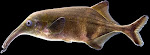
Pez elefante - Campylomormyrus rhynchophorus, que puede ayudar a entender como evolucionan las especies comunicandose entre si.
EFEMÉRIDES
John Dalton English scientist John Dalton, born this day (or September 5) in 1766, was a pioneer in the development of modern atomic theory and was considered by some contemporaries as the “father” of both meteorology and chemistry.
EMBRIÓN EN ACCIÓN
Science 329, 967–971 (2010): Ahora se puede disfrutar de esta secuencia en el tiempo, de nuevos detalles acerca del embrión del pez zebra, conforme se van iniciando sus primeras diez divisiones.
“Por más de 10,000 años, los perros han sido el mejor amigo del hombre"
“Los Perros son el único modelo natural para el estudio de desordenes psiquiátricos.”
Nature Neuroscience y Biotechnology
Una representación del virus HIV sobre la superficie de un linfocito T, generada por computadora, muestra la propuesta de Holt et al. de bloquear la entrada a la sangre, al agente causal del SIDA por medio del uso de la enzima llamada dedos de zinc que noquea al receptor del virus CCR5, presente en las células semilla hematopoyecticas en la página (p 839), se puede ver el artículo Credit: ANIMATE4.com/SciencePhotoLibrary
http://0-www.nature.com.fama.us.es/nbt/journal/v28/n8/covers/largecover.gif Nicholas Spitzer y colaboradores demostraron bellas neuronas piramidales en la portada de Nature Neuroscience de Agosto de 2010. (p 944)
"Una inteligencia que en un momento determinado conociera todas las fuerzas que animan a la naturaleza, así como la situación respectiva de los seres que la componen, si además fuera lo suficientemente amplia como para someter a análisis tales datos, podría abarcar en una sola fórmula los movimientos de los cuerpos más grandes del universo y los del átomo más ligero; nada le resultaría incierto y tanto el futuro como el pasado estarían presentes ante sus ojos"
Ensayo filosófico sobre las probabilidades (1814) Pierre-Simon Laplace (1749-1827)
Cosmos
DESPUES DEL BIG BANG
Grabado alemán que representa a Arquímedes en la Bañera
La UNAM, prestigio popular y público
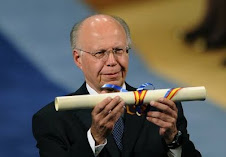
El Rector Narro recibe el Premio Principe de Asturias: Comunicación y Humanidades. Sin la UNAM, nuestro país probablemente sería ya, tal como Felipe Calderon desea, Mecsicou. Por cierto, ni Zedillo, menos Fox ni Calderón son universitarios, o sea que su concepción de país y cultura es, sabe que modo.
Somos una sociedad que recompensa generosamente a quienes nos hacen más pobres.
Paul Krugman premio nobel de economía 2008
¿deben los científicos más destacados, esos que iluminan los caminos de la investigación científica, dedicar algún tiempo a escribir libros de divulgación científica, tarea que puede "desviarlos" de practicar las habilidades por las que son preciosos?
Clade C es el subtipo más prevalente de HIV-1 en el mundo. La estructura cristalina del núcleo de clade C gp120 es descrito por Bjorkman y colegas, en conjunto con el complejo CD4 y el receptor CD4 - inducidos por anticuerpo. El trabajo revela que el anticuerpo hace contacto con ambos, gp120 y CD4. La portada de la revista muestra una escultura de vidrio de una partícula viral realizada por el artistaLuke Jerram (http://www.lukejerram.com/projects/glass_microbiology).pp 608–613
Bien Dotados
De la Biología evolutiva, la gran variación en el tamaño de los genitales en los animales queda definido en el caso del mosquito Gambusia holbrooki, cuyos miembros femeninos de su especie prefieren machos con genitales grandes para copular. De acuerdo a Andrew Kahn y su equipo de colaboradores de la Universidad Australiana de Camberra para estas femeninas, más grande es mejor.
Referencia EVOLUTIONARY BIOLOGY Well endowed Biol. Lett. doi:10.1098/rsbl.2009.0637 (2009)
Capullo Cósmico
El nacimiento de una enana blanca
Tema Reservado
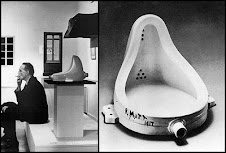
La Fuente de Marcel Duchamp
Precisamente uno de mis seguidores (ver más abajo), dedicó su columna periodística de la semana que termina a un tema, en mi opinión reservado, ¿Ustedes que opinan?
Sigueme
Arquímedes en la Tina invita a participar al que quiera darse un baño de ciencia y polémica.
Galileo Galilei
Nació en Pisa, el 15 de febrero de 1564. Murió en Florencia, el 8 de enero de 1642. Fue un astrónomo, filósofo, matemático y físico que estuvo relacionado estrechamente con la revolución científica. Eminente hombre del Renacimiento, mostró interés por casi todas las ciencias y artes (música, literatura, pintura). Sus logros incluyen la mejora del telescopio, gran variedad de observaciones astronómicas, la primera ley del movimiento y un apoyo determinante para el copernicanismo. Ha sido considerado como el "padre de la astronomía moderna", el "padre de la física moderna" y el "padre de la ciencia". Su trabajo experimental es considerado complementario a los escritos de Francis Bacon en el establecimiento del moderno método científico y su carrera científica es complementaria a la de Johannes Kepler. Su trabajo se considera una ruptura de las asentadas ideas aristotélicas y su enfrentamiento con la Iglesia Católica Romana suele tomarse como el mejor ejemplo de conflicto entre la autoridad y la libertad de pensamiento en la sociedad occidental.
Controvertido
Galileo ante el Santo Oficio: A pesar de pasar dos meses removiendo cielo y tierra para impedir lo inevitable, es convocado el 16 de febrero de 1616 por el Santo Oficio para el examen de las proposiciones de censura. Fue una catástrofe para él. La teoría copernicana fue condenada. El 25 de febrero y 26 de febrero de 1616, la censura es ratificada por la Inquisición y por el papa Pablo V.
Interesante que incursiones en lugares insospechados, pero, en mi opinión ello está reservado a maestros como Marcel Duchamp. Esta bien, es bueno evocar.
Marcel Duchamp, 28 de julio de 1887 - Neully-sur-Siena, 2 de Octubre de 1968). Artista y ajedrecista francés, cuya obra ejerció una fuerte influencia en la evolución del arte de vanguardia del siglo XX.